
 38th Annual Manzanar Pilgrimage: A Visit to the largest Japanese American Internment Camp
WHAT: 38th Annual Manzanar Pilgrimage
WHEN: Saturday, April 28, 2007
The Manzanar Committee is dedicated to educating the public about the Japanese American internment camp experience by organizing the annual Manzanar Pilgrimage. This year, the Southern California office of the Council on American-Islamic Relations (CAIR-LA) is working with the L.A. Manzanar Committee and the Japanese American Citizens League (JACL) to bring members of the California Muslim community to join for a one-day visit of Manzanar. (See History of Manzanar below)


This is a great opportunity for community leaders as well as college students to participate and share their experience with their respective communities.
Citing the significance of the trip, Executive Director Hussam Ayloush said, "With the growing anti-Muslim sentiments and incidents across the country, it is important to relearn and remember part of our nation's history when we as a country committed great injustices against innocent Americans solely based on their heritage and background."
 For those interested in taking the bus from Los Angeles, two buses sponsored by The Manzanar Committee will be leaving Little Tokyo and Torrance by 7 am. Cost for the bus is $20 and must be prepaid. Overnight accommodations are the responsibility of each visitor and will need to be handled individually at the following sites. There is LIMITED space on the buses so please contact CAIR-LA to reserve a spot on the bus. If a large number of people express interest in participating, we can rent a separate bus. Call ASAP to let us know.
Each year, people enjoy the first class Manzanar Museum located in the renovated internment camp gymnasium, tour the camp site, and then attend an educational program at about 12 noon. The program is followed by an interfaith ceremony at the cemetery monument in the camp. The ceremony is followed by a Japanese folk dancing circle in which all participate, accompanied by taiko drumming. An estimated 300-500 people attend the day program.
 During the evening, the committee organizes a Manzanar After Dark program focusing on college students who come primarily from the San Francisco Bay Area and Southern California. Each year, there are cultural performances, small group discussions with former internees, and open mic session where students often do spoken work, stories, sing, and make brief statements.
---
Manzanar History
Prepared by the Manzanar Committee
 The camp, which consisted of 36 blocks of barracks within a confined area of one-square mile, was the scene of many hardships as men, women, and children sought to establish some semblance of normal life while attempting to overcome the trauma of forced evacuation and facing an uncertain future. It was the resourcefulness and labor of the camp population, which turned Manzanar into a habitable place for the remainder of their enforced stay.
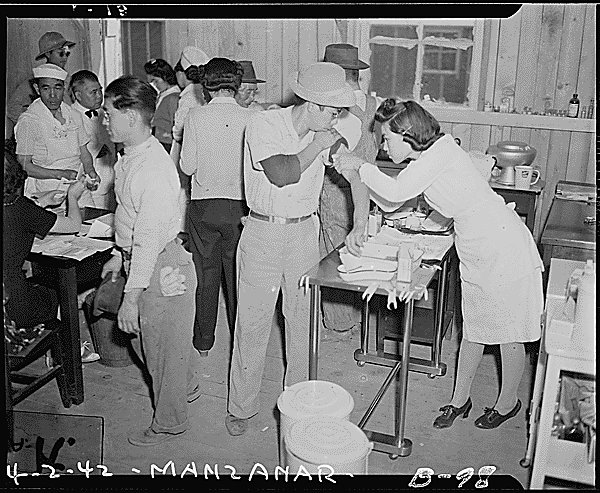
 Manzanar had some unique features for a war-time city. It was the only relocation center with an orphanage, called "Children’s Village." It was also the only site in California which had an advanced sewage and water filtering system, dismantled when the camp closed. The surgical and nursing team developed at the Manzanar Hospital became the training center for nurses whose study was interrupted by the evacuation. It was there that they completed their training, graduating with a recognized degree to practice nursing on the "outside."
 The apple trees for which Manzanar was named, had been abandoned prior to the war. They were pruned, fertilized and watered by Issei farmers during their internment, providing delicious apples for the internees. Many varieties that grew there are no longer available on the market.
Under the terms of the lease with the City of Los Angeles, which owned the land at Manzanar, the campsite was returned to its original condition. Barracks were auctioned off to returning veterans, and to businesses in nearby towns, such as the still existing Willow Hotel. All that remains today are the auditorium, the stone guardhouses, the cemetery and hundreds of trees planted by the internees.


No comments:
Post a Comment