I love Arabic poetry and proverbs. Most of them promote honor, heroism,
selflessness, sacrifice, love, courage, and justice. But there are a few
popular proverbs that need to be forever purged from the Arab culture because they
lead to cowardice, dishonor, defeatism, apathy, selfishness, and lack of
self-respect. Here are a few examples (I know that the rough translation sounds funny):
امش الحيط الحيط وقل يارب السترة
Walk beside the walls and pray for your safety (i.e. Avoid taking risks)
مين تزوج أمي بسمي عمي
Whoever marries my mother, I will call him my uncle (i.e. Go with the flow and blindly
submit to authority)
اليد التي لا تقدر عليها بوسها وادع عليها بالكسر
The hand which you cannot resist, kiss it in submission, and then pray that it
may be broken (i.e. Submit to injustice, and only resist it with empty hopes)
حط راسك بين الروس وقول يا قطّاع الروس
Place your head among all the other heads that are about to be cut, and then invite
the executioner to proceed (i.e. Blindly follow others, even if it is in
cowardice and helplessness)
ابعد عن الشر وغنّيله
Avoid trouble and sing to it (Usually used to convince people that getting
involved in undoing injustice will only bring trouble)
الباب اللِّي بيجيك منهْ الريح، سدُّهٌ واستريح
The door from which wind will come, shut it and be safe (i.e. Don't rock the
boat. Avoid trouble)
الف مرة جبان ولا يقولوا مرة واحدة الله يرحمه
One thousand times coward is better than saying may God bless his soul (i.e. It
is better to live as a coward without dignity and rights than to risk one's
life and die)
For years, many Arab (especially Syrian) parents repeated those proverbs
to their children to sway them from challenging repressive and brutal rulers. A
whole generation of
people who behaved like sheep developed, a generation of mostly subdued, humiliated,
terrorized, intimidated, and apathetic people. With the exception of a few brave ones -- most of whom were executed, tortured, or exiled -- most Arabs witnessed and endured occupation, abuse, humiliation, dispossession, and denial of basic human rights for them, their neighbors, relatives, friends, and loved ones. Most bore this abuse with resigned attitudes of complicity, apathy, and silence; some even responded with acceptance, justification, or opportunism.
In some countries like Syria, Libya, Iraq, and Tunisia, citizens allowed their psychotic and sadistic rulers to deprive them of political opinions or even of their hopes and dreams for a better day. Those victims, through the propagation of defeatist proverbs, justified their silence as a self-preservation and protection of loved ones and innocently helped extend the rule of fear, complicity, and helplessness for decades in their societies. Those proverbs and the attitudes they inspired are responsible
for half a century of dictators who, until recently, believed that they had an
unquestionable right to own the country, subdue its people, and murder
dissenters.
When the Palestinians erased those destructive proverbs from use, the
Intifada (uprising) against the brutal Israeli occupation started. And when other Arabs abandoned those proverbs and their resulting culture of
fear, apathy, cowardice, and dishonor, the masses launched the Arab Spring and
the popular Arab revolutions for freedom.
Out of a defeated and broken population came out amazing stories of heroism, courage, selflessness and sacrifice for justice, freedom and dignity, in Syria, Tunisia, Libya, Egypt, Bahrain, Yemen, Palestine (Gaza and now in Bab Al-Shams), and many other places. Arabs, and all other nations, must permanently erase those proverbs from their psyche and culture to ensure that dictators are never allowed to return and for the remaining ones to reform or be dumped into history's trash, along with Assad, Saddam, Mubarak, Ben Ali, Qaddafi, and all those like them.
A nation is in good condition as long as its culture advances a sense of
dignity, love for freedom, and pursuit of happiness, equality, justice, and
peace for all.
In the Qur'an (17:70), God says:
"And indeed We have honored the Children of Adam"
The honor and dignity bestowed by God on all people cannot be taken away by another human being, unless that person accepts to forfeit that God-given right.
Truly, a nation is in good shape as long as its people dare to speak out and stand
against injustice.
In the Qur'an (4:135), God commands us:
“O you who believe! Stand out firmly for justice, as witnesses to God"
The prophet Muhammad (peace be upon him) said: "The best Jihad is
speaking truth to an unjust (repressive) ruler."
أفضل
الجهاد كلمة عدل عند سلطان جائر
And that is my jihad today.
About Me

- Hussam Ayloush
- Hussam has been a lifelong human rights activist who is passionate about promoting democratic societies, in the US and worldwide, in which all people, including immigrants, workers, minorities, and the poor enjoy freedom, justice, economic justice, respect, and equality. Mr. Ayloush frequently lectures on Islam, media relations, civil rights, hate crimes and international affairs. He has consistently appeared in local, national, and international media. Full biography at: http://hussamayloush.blogspot.com/2006/08/biography-of-hussam-ayloush.html
Showing posts with label injustice. Show all posts
Showing posts with label injustice. Show all posts
Thursday, January 17, 2013


Tuesday, December 20, 2011
Time to challenge political hypocrisy about and in the M.E.
Iraqi rulers: You are political hypocrites if you oppose Baath's repression in Iraq, but support it in Syria.
Arab Nationalists and leftists: You are political hypocrites if you oppose brutal repression by Israel, but defend it in Syria.
Iranian and Hizbollah leaders: You are political hypocrites if you support freedom and justice in Bahrain, but oppose it in Syria.
Fellow Sunnis: You are political hypocrites if you support freedom and justice in Syria, but oppose it in Bahrain.
Fellow Westerners: You are political hypocrites if you support freedom and democracy in Libya, but fund occupation and apartheid by Israel.
Fellow Muslims: We are political hypocrites if we speak against Islamophobia, but not sufficiently challenge our own fanatics.
Tuesday, October 26, 2010
Judge: Feds violated U.S. Islamic group's rights (Politico)
My quick comments on the news article:
In brief, the court affirmed what many people in America knew all along. The 5th Circuit Court of Appeals ruled that the government/DOJ was wrong in 2007 when it publicly included NAIT, ISNA, CAIR, and others as part of a list of "unindicted co-conspirators". The ruling asserts that there was no evidence that any of these organizations had committed any crime. Moreover, none of these organizations was ever charged with any crime.
It is clear that certain individuals, driven by shady political motivations (anti-Muslim, right-wing, or/and Zionist), at the DOJ and the FBI intended to undermine the credibility and functionality of the American Muslim community and its leading and most respected organizations.
Publicizing the list was in an apparent violation of the Justice Department's own policies. Someone aimed to weaken the voice and the representation of American Muslims in the affairs of their own country. And this is not the first time the FBI has applied such unscrupulous tactics. After all, for a long time in the 60s, the FBI labeled Dr. King as a communist and anti-American activist, and worked hard to tarnish his credibility.
The DOJ and the FBI owe the Muslim community and its respectable organizations an apology; another one to add to the list that I am not expecting to see any time soon.
---
Judge: Feds violated U.S. Islamic group's rights
Politico.com
Josh Gerstein, October 20, 2010
Federal prosecutors violated the rights of a major American Islamic organization by including it in a list of unindicted co-conspirators in a terrorism-support case, a federal judge ruled in an opinion ordered disclosed Wednesday by a federal appeals court...
U.S. District Court Judge Jorge Solis found that the Justice Department violated the Fifth Amendment rights of the North American Islamic Trust in 2007 by including it on the publicly filed co-conspirator list in a criminal case accusing the Holy Land Foundation and five of its officers of conspiring to support Hamas. Solis's decision, issued in July 2009 and first reported in broad strokes on this blog last October, was confirmed in an opinion issued Wednesday by the U.S. Court of Appeals for the Fifth Circuit.
"The [district] court held that NAIT's motion was properly filed and its Fifth Amendment right had been violated by its public naming," Appeals Court Judge Emilio Garza wrote for a unanimous panel including Judges Fortunato Benavides and Marcia Crone. "The Court held that the Government did not argue or establish any legitimate government interest that warranted publicly identifying NAIT and 245 other individuals and entities as unindicted coconspirators or joint venturers, and that the Government had less injurious means than those employed, such as anonymously designating the unindicted co-conspirators as 'other persons,' asking the court to file the document under seal, or disclosing the information to the defendants pursuant to a protective order."
Garza said that the Justice Department called the failure to seal the filing an "unfortunate oversight" and that the government did not dispute the finding of a Fifth Amendment violation. The public naming also appears to have violated Justice Department policy, but that issue was not discussed by the appeals court.
The appeals court said Solis erred by sealing his opinion finding the Constitutional violation, which appears to involve the inability of the groups and individuals on the list to defend themselves formally against the government's accusation since they were not defendants in the case.
"Both NAIT and the Government suggest that the district court may have been trying to shield NAIT from further reputational harm related to its public naming in this case," Garza wrote. "Regardless of the intention behind the district court’s decision, however, its effect was to leave NAIT hamstrung in its ability to mitigate the damage done by its public identification as a possible co-conspirator in the activities of the HLF Defendants. NAIT was publicly identified in Attachment A for over two years, and the public took note."
NAIT asked the appeals court to unseal Solis's opinion and to strike the part linking NAIT to HLF and Hamas. However, the appeals court declined to erase or vacate that part of Solis's opinion, which found there was "ample evidence to establish the association of ... NAIT with HLF, the Islamic Association of Palestine ('IAP') and Hamas." The appeals court said the judge's determination was unnecessary but that, given the posture of the case, it was not the appellate court's role to approve or reject Solis's findings. However, the appeals court stressed that Solis's "findings do not amount to a ruling that NAIT took part in a criminal conspiracy to support Hamas."
During the appeal, the Justice Department took the position that it never actually labeled NAIT and the others on the list as definite "co-conspirators," since the heading they appeared under included the alternate desgination "joint venturers" — a weaker tie which does not imply knowledge of criminality.
CAIR and ISNA did not appeal Solis's ruling, the full text of which remains under seal pending implementation of the appeals court's opinion.
"We're reviewing the court's decision," a Justice Department spokeswoman, Laura Sweeney, said. The prosecutor who filed the co-conspirator list, James Jacks, is now serving in an interim capacity as the U.S. Attorney for the Northern District of Texas. A call to that office after working hours reached voice mail.
NAIT serves as owner of a number of mosques across the U.S.
In brief, the court affirmed what many people in America knew all along. The 5th Circuit Court of Appeals ruled that the government/DOJ was wrong in 2007 when it publicly included NAIT, ISNA, CAIR, and others as part of a list of "unindicted co-conspirators". The ruling asserts that there was no evidence that any of these organizations had committed any crime. Moreover, none of these organizations was ever charged with any crime.
It is clear that certain individuals, driven by shady political motivations (anti-Muslim, right-wing, or/and Zionist), at the DOJ and the FBI intended to undermine the credibility and functionality of the American Muslim community and its leading and most respected organizations.
Publicizing the list was in an apparent violation of the Justice Department's own policies. Someone aimed to weaken the voice and the representation of American Muslims in the affairs of their own country. And this is not the first time the FBI has applied such unscrupulous tactics. After all, for a long time in the 60s, the FBI labeled Dr. King as a communist and anti-American activist, and worked hard to tarnish his credibility.
The DOJ and the FBI owe the Muslim community and its respectable organizations an apology; another one to add to the list that I am not expecting to see any time soon.
---
Judge: Feds violated U.S. Islamic group's rights
Politico.com
Josh Gerstein, October 20, 2010
Federal prosecutors violated the rights of a major American Islamic organization by including it in a list of unindicted co-conspirators in a terrorism-support case, a federal judge ruled in an opinion ordered disclosed Wednesday by a federal appeals court...
U.S. District Court Judge Jorge Solis found that the Justice Department violated the Fifth Amendment rights of the North American Islamic Trust in 2007 by including it on the publicly filed co-conspirator list in a criminal case accusing the Holy Land Foundation and five of its officers of conspiring to support Hamas. Solis's decision, issued in July 2009 and first reported in broad strokes on this blog last October, was confirmed in an opinion issued Wednesday by the U.S. Court of Appeals for the Fifth Circuit.
Solis also found that the government should not have included the other names on the list, including those of the Council on American-Islamic Relations and the Islamic Society of North America. The groups were never charged with any crime and they loudly complained in public that the federal government had unfaily tarnished their reputations.
"The [district] court held that NAIT's motion was properly filed and its Fifth Amendment right had been violated by its public naming," Appeals Court Judge Emilio Garza wrote for a unanimous panel including Judges Fortunato Benavides and Marcia Crone. "The Court held that the Government did not argue or establish any legitimate government interest that warranted publicly identifying NAIT and 245 other individuals and entities as unindicted coconspirators or joint venturers, and that the Government had less injurious means than those employed, such as anonymously designating the unindicted co-conspirators as 'other persons,' asking the court to file the document under seal, or disclosing the information to the defendants pursuant to a protective order."
Garza said that the Justice Department called the failure to seal the filing an "unfortunate oversight" and that the government did not dispute the finding of a Fifth Amendment violation. The public naming also appears to have violated Justice Department policy, but that issue was not discussed by the appeals court.
The appeals court said Solis erred by sealing his opinion finding the Constitutional violation, which appears to involve the inability of the groups and individuals on the list to defend themselves formally against the government's accusation since they were not defendants in the case.
"Both NAIT and the Government suggest that the district court may have been trying to shield NAIT from further reputational harm related to its public naming in this case," Garza wrote. "Regardless of the intention behind the district court’s decision, however, its effect was to leave NAIT hamstrung in its ability to mitigate the damage done by its public identification as a possible co-conspirator in the activities of the HLF Defendants. NAIT was publicly identified in Attachment A for over two years, and the public took note."
NAIT asked the appeals court to unseal Solis's opinion and to strike the part linking NAIT to HLF and Hamas. However, the appeals court declined to erase or vacate that part of Solis's opinion, which found there was "ample evidence to establish the association of ... NAIT with HLF, the Islamic Association of Palestine ('IAP') and Hamas." The appeals court said the judge's determination was unnecessary but that, given the posture of the case, it was not the appellate court's role to approve or reject Solis's findings. However, the appeals court stressed that Solis's "findings do not amount to a ruling that NAIT took part in a criminal conspiracy to support Hamas."
During the appeal, the Justice Department took the position that it never actually labeled NAIT and the others on the list as definite "co-conspirators," since the heading they appeared under included the alternate desgination "joint venturers" — a weaker tie which does not imply knowledge of criminality.
CAIR and ISNA did not appeal Solis's ruling, the full text of which remains under seal pending implementation of the appeals court's opinion.
"We're reviewing the court's decision," a Justice Department spokeswoman, Laura Sweeney, said. The prosecutor who filed the co-conspirator list, James Jacks, is now serving in an interim capacity as the U.S. Attorney for the Northern District of Texas. A call to that office after working hours reached voice mail.
NAIT serves as owner of a number of mosques across the U.S.
Wednesday, August 27, 2008
I'm Home, but Still Haunted by Guantanamo
By Jumah al Dossari, former Guantanamo Bay detainee
Sunday, August 17, 2008
Published in the Washington Post
Reporter/writer's note:
DAMMAM, Saudi Arabia
 It has been a little over a year since I left the U.S. military prison at Guantanamo Bay, Cuba, but I still have trouble sleeping sometimes. On a recent restless night, I found a DVD entitled "United 93" beside the family television set. I had no idea what it was about, but I started watching. When I realized that it was about the hijacked American plane that had crashed in Pennsylvania on Sept. 11, 2001, I began to cry. It reminded me of a very simple question I had asked myself countless times during my 5 1/2 years in Guantanamo: When will humans start treating each other with respect, whatever our religion or color?
 I arrived in Guantanamo in January 2002 after Pakistani forces handed me over to the United States, probably, I suspect, for a bounty. I had been in Afghanistan to assess the progress of a mosque-building project there, funded by people in my native Saudi Arabia. I knew that Afghanistan was a dangerous place, but I was paid for the trip and I needed the money, so I went. It is a decision I will always regret. When the U.S. began bombing Afghanistan in November 2001, I fled to Pakistan. At a border checkpoint, I asked Pakistani guards for help getting to the Saudi embassy. Instead, they put me in a prison, where I was kept for days with shackles on my legs.
After several weeks, I was blindfolded and flown with other detainees to a U.S. military base in Kandahar, Afghanistan. Upon our arrival there, we were thrown to the ground. Someone hit my head and forced his boot into my mouth. Despite the freezing Afghan winter, I spent several weeks in an open tent circled with barbed wire. I still have scars from my time in Kandahar. One is from a cigarette that was extinguished on my wrist and the other from the time I was pushed to a floor covered with broken glass.
 One night about two weeks after our arrival, some soldiers came and cut off my clothes and put me in an orange suit. They fitted me with very tight goggles so that I could not see and put something over my ears so that I could not hear. I was chained to the floor of a plane for several hours, then again to the floor of another for what seemed like an eternity. When they pulled us off the second plane, we had no idea where we were.
It was Guantanamo.
We were taken to Camp X-Ray, which consists of cages of the sort that would normally hold animals. Imprisoned in these cages, we were forbidden to move and sometimes forbidden to pray. Later, the guards allowed us to pray and even to turn around, but whenever new detainees arrived, we were again prohibited from doing anything but sitting still.
Physical brutality was not uncommon during those first years at Guantanamo. In Camp X-Ray, several soldiers once beat me so badly that I spent three days in intensive care. My face and body were still swollen and covered in bruises when I left the hospital. During one interrogation, my questioner, apparently dissatisfied with my answers, slammed my head against the table. During others, I was shackled to the floor for hours.
In later years, such physical assaults subsided, but they were replaced by something more painful: I was deprived of human contact. For several months, the military held me in solitary confinement after a suicide attempt. I had no clothes other than a pair of shorts and no bed but a dirty plastic mat. The air conditioner was on 24 hours a day; the cell's cold metal walls made it feel as though I was living inside a freezer. There was no faucet, so I had to use the water in the toilet for drinking and washing.
 I was transferred to the maximum-security Camp Five in May 2004. There I lived -- if that word can be used -- in a cell with cement walls. I was permitted to exercise once or twice a week; otherwise, I was alone in my cell at all times. I had nothing to occupy my mind except a Koran and some censored letters from my family. Interrogators told me that I would live like that for 50 years.
While I was in Camp Five, the military gave me a piece of paper that laid out the allegations against me. I had been in Guantanamo at that point for 2 1/2 years. My lawyer later told me that I had received this paper as a result of a U.S. Supreme Court ruling that detainees were to be allowed to have court hearings. We never got the promised hearings; instead, we went through military hearings at Guantanamo in which we were not shown any evidence or allowed to have lawyers. All we got was the piece of paper.
Some of the allegations were silly. One said that I had gone to Afghanistan for military training in 1989. The truth was that I had told an interrogator about a trip I had made to Afghanistan for a weekend as an overweight 16-year old after the war with the Soviet Union there ended. This trip was sponsored by the Saudi government, which had helped fund the Afghan mujaheddin and was celebrating -- with the United States -- the defeat of the Soviets.
Only one of the allegations seemed to be directly related to what is called the "War on Terror." It said that I had been "present at Tora Bora." No other details were provided. I had never heard of Tora Bora (although I later learned that it was Osama bin Laden's suspected hiding place, where U.S. forces battled the Taliban in December 2001). Later, I learned that a Yemeni detainee had told interrogators that I had been there, along with many others, because he hoped to be released if he was seen as cooperating with the U.S. military.
I know that there have been newspaper stories saying that I recruited people to go to al-Qaeda training camps. But the sheet of paper the military gave me said nothing about recruiting, which is not something I have ever done.
There were many times in Guantanamo when I felt as though I was falling apart, like a sandcastle being washed out by the tide. I lost all hope and faith. The purpose of Guantanamo is to destroy people, and I was destroyed. I decided that I preferred death to life, and I attempted suicide several times.
Once, during a break in a meeting with my attorney, I cut my arm with a razor and tried to hang myself. I do not remember it, but apparently my attorney returned earlier than I had told him to and found me suspended by my neck from the cell wall, unconscious and covered in blood. I broke a vertebra but survived with surgery.
Between suicide attempts, I tried desperately to hold on to the few fleeting moments of light that presented themselves to me. I met every few months with my attorneys and felt better whenever they were in Guantanamo, but my despair would return within a day of their departure. On occasion, I was helped by compassionate guards. After the beating in Camp X-Ray, a young female guard appeared at my cage, looking to make sure that no other guards were watching. "I'm sorry for what happened to you," she whispered to me. "You're a human being just like us." These words were a temporary balm for my bruises and loneliness. Ultimately, though, I believe it was God who did not allow me to die.
In July 2007, a colonel told me that I was going home. He did not explain why I was suddenly no longer too dangerous to live in freedom. Four days later, I was put on a Saudi government plane. When we landed in Riyadh and I saw my family, I was overwhelmed. We all cried and hugged. I said hello to someone I thought was my sister only to hear her say, "Daddy." I looked at her face again and saw that it was my daughter, who had grown from a 7-year-old child to a 13-year-old young woman while I'd been gone.
In Guantanamo, I was very angry with the people who had decided to hold me thousands of miles from home without charging or trying me. I was very angry with the people who kept me in isolation even when I was at my most desperate. I was very angry about having no rights at all. I was not angry with Americans in general and I even drew comfort from some, such as my lawyers and the kind soldier. But I could scarcely comprehend how U.S. policy had allowed me to be treated as I had been.
On the plane ride home, though, I decided that I would have to forgive to go on with my life. I also know that Sept. 11 was a great tragedy that caused some people to do dark things that they would not otherwise do. This knowledge helped me forget my miserable existence in Guantanamo and open my heart to life again, including to my recent re-marriage.
When I was watching "United 93," I thought of the soldier who had offered me compassion in Guantanamo. Her words reminded me that we all share common values, and only by holding on to them can we ensure that there is mercy and brotherhood in the world. After more than five years in Guantanamo, I can think of nothing more important.
Sunday, August 17, 2008
Published in the Washington Post
Reporter/writer's note:
I've covered the U.S. detention facility at Guantanamo Bay, Cuba, since 2004 as military correspondent for The Post. Jumah al Dossari first caught my attention in October 2005, when I heard the story of his gruesome suicide attempt during a visit from his lawyer. Then known as Detainee #261, Dossari clearly was making a public plea for help. Though the U.S. military has said many times that all detainees at Guantanamo are treated humanely and that Dossari had been getting the help he needed, detention in Guantanamo apparently became more than he could bear. His wish to die humanized the desperation of many detainees held indefinitely at the facility.
U.S. officials maintained for years that Dossari was a dangerous terrorist who had been arrested after going to Afghanistan to fight with the Taliban against U.S. forces. Dossari also spent some time in the United States and allegedly tried to recruit terrorists with fiery sermons, something that obviously raised concerns among his interrogators and jailers. Nevertheless, he was never charged with a crime, never admitted any connection to terrorism and was ultimately released to Saudi Arabia in July 2007.
His return to freedom has been smooth. He is employed, married and doing well. When I talked to him by cellphone from Dammam late last year, he spoke of a hope and a peace and a forgiveness that arose from his "black days" behind bars at Guantanamo.
-- Josh White
---
U.S. officials maintained for years that Dossari was a dangerous terrorist who had been arrested after going to Afghanistan to fight with the Taliban against U.S. forces. Dossari also spent some time in the United States and allegedly tried to recruit terrorists with fiery sermons, something that obviously raised concerns among his interrogators and jailers. Nevertheless, he was never charged with a crime, never admitted any connection to terrorism and was ultimately released to Saudi Arabia in July 2007.
His return to freedom has been smooth. He is employed, married and doing well. When I talked to him by cellphone from Dammam late last year, he spoke of a hope and a peace and a forgiveness that arose from his "black days" behind bars at Guantanamo.
-- Josh White
---
DAMMAM, Saudi Arabia
 It has been a little over a year since I left the U.S. military prison at Guantanamo Bay, Cuba, but I still have trouble sleeping sometimes. On a recent restless night, I found a DVD entitled "United 93" beside the family television set. I had no idea what it was about, but I started watching. When I realized that it was about the hijacked American plane that had crashed in Pennsylvania on Sept. 11, 2001, I began to cry. It reminded me of a very simple question I had asked myself countless times during my 5 1/2 years in Guantanamo: When will humans start treating each other with respect, whatever our religion or color?
 I arrived in Guantanamo in January 2002 after Pakistani forces handed me over to the United States, probably, I suspect, for a bounty. I had been in Afghanistan to assess the progress of a mosque-building project there, funded by people in my native Saudi Arabia. I knew that Afghanistan was a dangerous place, but I was paid for the trip and I needed the money, so I went. It is a decision I will always regret. When the U.S. began bombing Afghanistan in November 2001, I fled to Pakistan. At a border checkpoint, I asked Pakistani guards for help getting to the Saudi embassy. Instead, they put me in a prison, where I was kept for days with shackles on my legs.
After several weeks, I was blindfolded and flown with other detainees to a U.S. military base in Kandahar, Afghanistan. Upon our arrival there, we were thrown to the ground. Someone hit my head and forced his boot into my mouth. Despite the freezing Afghan winter, I spent several weeks in an open tent circled with barbed wire. I still have scars from my time in Kandahar. One is from a cigarette that was extinguished on my wrist and the other from the time I was pushed to a floor covered with broken glass.
 One night about two weeks after our arrival, some soldiers came and cut off my clothes and put me in an orange suit. They fitted me with very tight goggles so that I could not see and put something over my ears so that I could not hear. I was chained to the floor of a plane for several hours, then again to the floor of another for what seemed like an eternity. When they pulled us off the second plane, we had no idea where we were.
It was Guantanamo.
We were taken to Camp X-Ray, which consists of cages of the sort that would normally hold animals. Imprisoned in these cages, we were forbidden to move and sometimes forbidden to pray. Later, the guards allowed us to pray and even to turn around, but whenever new detainees arrived, we were again prohibited from doing anything but sitting still.
Physical brutality was not uncommon during those first years at Guantanamo. In Camp X-Ray, several soldiers once beat me so badly that I spent three days in intensive care. My face and body were still swollen and covered in bruises when I left the hospital. During one interrogation, my questioner, apparently dissatisfied with my answers, slammed my head against the table. During others, I was shackled to the floor for hours.
In later years, such physical assaults subsided, but they were replaced by something more painful: I was deprived of human contact. For several months, the military held me in solitary confinement after a suicide attempt. I had no clothes other than a pair of shorts and no bed but a dirty plastic mat. The air conditioner was on 24 hours a day; the cell's cold metal walls made it feel as though I was living inside a freezer. There was no faucet, so I had to use the water in the toilet for drinking and washing.
 I was transferred to the maximum-security Camp Five in May 2004. There I lived -- if that word can be used -- in a cell with cement walls. I was permitted to exercise once or twice a week; otherwise, I was alone in my cell at all times. I had nothing to occupy my mind except a Koran and some censored letters from my family. Interrogators told me that I would live like that for 50 years.
While I was in Camp Five, the military gave me a piece of paper that laid out the allegations against me. I had been in Guantanamo at that point for 2 1/2 years. My lawyer later told me that I had received this paper as a result of a U.S. Supreme Court ruling that detainees were to be allowed to have court hearings. We never got the promised hearings; instead, we went through military hearings at Guantanamo in which we were not shown any evidence or allowed to have lawyers. All we got was the piece of paper.
Some of the allegations were silly. One said that I had gone to Afghanistan for military training in 1989. The truth was that I had told an interrogator about a trip I had made to Afghanistan for a weekend as an overweight 16-year old after the war with the Soviet Union there ended. This trip was sponsored by the Saudi government, which had helped fund the Afghan mujaheddin and was celebrating -- with the United States -- the defeat of the Soviets.
Only one of the allegations seemed to be directly related to what is called the "War on Terror." It said that I had been "present at Tora Bora." No other details were provided. I had never heard of Tora Bora (although I later learned that it was Osama bin Laden's suspected hiding place, where U.S. forces battled the Taliban in December 2001). Later, I learned that a Yemeni detainee had told interrogators that I had been there, along with many others, because he hoped to be released if he was seen as cooperating with the U.S. military.
I know that there have been newspaper stories saying that I recruited people to go to al-Qaeda training camps. But the sheet of paper the military gave me said nothing about recruiting, which is not something I have ever done.
There were many times in Guantanamo when I felt as though I was falling apart, like a sandcastle being washed out by the tide. I lost all hope and faith. The purpose of Guantanamo is to destroy people, and I was destroyed. I decided that I preferred death to life, and I attempted suicide several times.
Once, during a break in a meeting with my attorney, I cut my arm with a razor and tried to hang myself. I do not remember it, but apparently my attorney returned earlier than I had told him to and found me suspended by my neck from the cell wall, unconscious and covered in blood. I broke a vertebra but survived with surgery.
Between suicide attempts, I tried desperately to hold on to the few fleeting moments of light that presented themselves to me. I met every few months with my attorneys and felt better whenever they were in Guantanamo, but my despair would return within a day of their departure. On occasion, I was helped by compassionate guards. After the beating in Camp X-Ray, a young female guard appeared at my cage, looking to make sure that no other guards were watching. "I'm sorry for what happened to you," she whispered to me. "You're a human being just like us." These words were a temporary balm for my bruises and loneliness. Ultimately, though, I believe it was God who did not allow me to die.
In July 2007, a colonel told me that I was going home. He did not explain why I was suddenly no longer too dangerous to live in freedom. Four days later, I was put on a Saudi government plane. When we landed in Riyadh and I saw my family, I was overwhelmed. We all cried and hugged. I said hello to someone I thought was my sister only to hear her say, "Daddy." I looked at her face again and saw that it was my daughter, who had grown from a 7-year-old child to a 13-year-old young woman while I'd been gone.
In Guantanamo, I was very angry with the people who had decided to hold me thousands of miles from home without charging or trying me. I was very angry with the people who kept me in isolation even when I was at my most desperate. I was very angry about having no rights at all. I was not angry with Americans in general and I even drew comfort from some, such as my lawyers and the kind soldier. But I could scarcely comprehend how U.S. policy had allowed me to be treated as I had been.
On the plane ride home, though, I decided that I would have to forgive to go on with my life. I also know that Sept. 11 was a great tragedy that caused some people to do dark things that they would not otherwise do. This knowledge helped me forget my miserable existence in Guantanamo and open my heart to life again, including to my recent re-marriage.
When I was watching "United 93," I thought of the soldier who had offered me compassion in Guantanamo. Her words reminded me that we all share common values, and only by holding on to them can we ensure that there is mercy and brotherhood in the world. After more than five years in Guantanamo, I can think of nothing more important.
ALSO READ:
Saturday, November 03, 2007
Fisk: Warning, this film could make you angry
 Robert Fisk commenting on the new movie "Rendition"
03 November 2007
At university, we male students used to say that it was impossible to take a beautiful young woman to the cinema and concentrate on the film. But in Canada, I've at last proved this to be untrue. Familiar with the Middle East and its abuses – and with the vicious policies of George Bush – we both sat absorbed by Rendition, Gavin Hood's powerful, appalling testimony of the torture of a "terrorist suspect" in an unidentified Arab capital after he was shipped there by CIA thugs in Washington.
Why did an Arab "terrorist" telephone an Egyptian chemical engineer – holder of a green card and living in Chicago with a pregnant American wife while he was attending an international conference in Johannesburg? Did he have knowledge of how to make bombs? (Unfortunately, yes – he was a chemical engineer – but the phone calls were mistakenly made to his number.)
He steps off his plane at Dulles International Airport and is immediately shipped off on a CIA jet to what looks suspiciously like Morocco – where, of course, the local cops don't pussyfoot about Queensberry rules during interrogation. A CIA operative from the local US embassy – played by a nervous Jake Gyllenhaal – has to witness the captive's torture while his wife pleads with congressmen in Washington to find him.
The Arab interrogator – who starts with muttered questions to the naked Egyptian in an underground prison – works his way up from beatings to a "black hole", to the notorious "waterboarding" and then to electricity charges through the captive's body...
Well, suffice it to say that the CIA guy turns soft, rightly believes the Egyptian is innocent, forces his release by the local minister of interior...Not very realistic?
Why did an Arab "terrorist" telephone an Egyptian chemical engineer – holder of a green card and living in Chicago with a pregnant American wife while he was attending an international conference in Johannesburg? Did he have knowledge of how to make bombs? (Unfortunately, yes – he was a chemical engineer – but the phone calls were mistakenly made to his number.)
He steps off his plane at Dulles International Airport and is immediately shipped off on a CIA jet to what looks suspiciously like Morocco – where, of course, the local cops don't pussyfoot about Queensberry rules during interrogation. A CIA operative from the local US embassy – played by a nervous Jake Gyllenhaal – has to witness the captive's torture while his wife pleads with congressmen in Washington to find him.
The Arab interrogator – who starts with muttered questions to the naked Egyptian in an underground prison – works his way up from beatings to a "black hole", to the notorious "waterboarding" and then to electricity charges through the captive's body...
Well, suffice it to say that the CIA guy turns soft, rightly believes the Egyptian is innocent, forces his release by the local minister of interior...Not very realistic?
Well, think again. For in Canada lives Maher Arar, a totally harmless software engineer – originally from Damascus – who was picked up at JFK airport in New York and underwent an almost identical "rendition" to the fictional Egyptian in the movie. Suspected of being a member of al-Qa'ida – the Canadian Mounties had a hand in passing on this nonsense to the FBI – he was put on a CIA plane to Syria where he was held in an underground prison and tortured. The Canadian government later awarded Arar $10m in compensation and he received a public apology from Prime Minister Stephen Harper...
 But then again, what can you expect of a president whose nominee for Alberto Gonzales's old job of attorney general, Michael Mukasey, tells senators that he doesn't "know what is involved" in the near-drowning "waterboarding" torture used by US forces during interrogations. "If waterboarding is torture, torture is not constitutional," the luckless Mukasey bleated.
Yes, and I suppose if electric shocks to the body constitute torture – if, mind you – that would be unconstitutional. Right? The New York Times readers at least spotted the immorality of Mukasey's remarks. A former US assistant attorney asked "how the United States could hope to regain its position as a respected world leader on the great issues of human rights if its chief law enforcement officer cannot even bring himself to acknowledge the undeniable verity that waterboarding constitutes torture...". As another reader pointed out, "Like pornography, torture doesn't require a definition." ...
So is truth stranger than fiction? Or is Hollywood waking up – after Syriana and Munich – to the gross injustices of the Middle East and the shameless and illegal policies of the US in the region? Go and see Rendition – it will make you angry – and remember Arar. And you can take a beautiful woman along to share your fury.
 But then again, what can you expect of a president whose nominee for Alberto Gonzales's old job of attorney general, Michael Mukasey, tells senators that he doesn't "know what is involved" in the near-drowning "waterboarding" torture used by US forces during interrogations. "If waterboarding is torture, torture is not constitutional," the luckless Mukasey bleated.
Yes, and I suppose if electric shocks to the body constitute torture – if, mind you – that would be unconstitutional. Right? The New York Times readers at least spotted the immorality of Mukasey's remarks. A former US assistant attorney asked "how the United States could hope to regain its position as a respected world leader on the great issues of human rights if its chief law enforcement officer cannot even bring himself to acknowledge the undeniable verity that waterboarding constitutes torture...". As another reader pointed out, "Like pornography, torture doesn't require a definition." ...
So is truth stranger than fiction? Or is Hollywood waking up – after Syriana and Munich – to the gross injustices of the Middle East and the shameless and illegal policies of the US in the region? Go and see Rendition – it will make you angry – and remember Arar. And you can take a beautiful woman along to share your fury.
Monday, August 27, 2007
Prisoner 345
 Who is prisoner 345? And why should you and I care about him?
Prisoner 345 is Sami Al-Haj. Sami Al-Haj is prisoner 345 at the United States Detainment Camp in Guantanamo Bay Cuba. Sami has been on hunger strike since 7th January, 2007.
Sami was arrested in Pakistan in December 2001 while travelling with a legitimate visa to work in Afghanistan as a cameraman for Al Jazeera. But he is being held as an ‘enemy combatant’. Al Jazeera, its offices, and its reporters have regularly come under attack (political as well as physical) by the Bush administration. Its crime is not becoming a cheer leader (like many other media outlets that we shall not mention) for the Bush administration's numerous endless wars.
The Bush administration and the Pentagon have not charged Sami with any crime. Who gives us the right to take the freedom of people and separate them from their families without charging them with crimes? How would we feel if an American is subjected to such immoral and illegal practice?
Mr. Al-Haj must be freed and compensated for all the harm we have caused to him and his family. Mr. Al-Haj deserves an apology. But again, we owe this apology to the millions of innocent Iraqis and Afghans that we have ruined their livelihoods for the terrorist crime of 9/11 which they had no responsibility for.
I never met Sami Al-Haj. I never worked for Al-Jazeera. So why do I care? This position is basically for three groups of people. The first, it is for me personally. I have to be able to look at myself in the mirror. The Prophet Muhammad (peace be upon him) said that one who sees injustice and remains silent about it is a mute devil, ie a silent partner in that injustice. I do not want to be an accomplice in this major injustice.
The second group is my children. I have always stressed to my children the Qur'anic teaching of speaking against injustice, especially when it is committed by one's own. Presently, my country is engaging in unjust practices. Remaining silent is not an option. My children need to know that when I had the chance to speak out, I did not cower. The Guantanamo Bay Gulag must be shut down. Those responsible for any crimes should have their day in an independent court and if not found guilty, they should be freed. The indefinite detention without charges is in itself a form of terrorism (called kidnapping), let alone the torture our government (sanctioned by our Attorney General Alberto Gonzales) has applied in the process. This is not what America stands for. As Americans, we have a duty to oppose those whose actions taint our country's history, image, and credibility. Of course, our first duty is to defend the dignity and humanity of every human being.
The third group is Sami’s family: his parents, his wife, and his son Mohammad who was born after Sami was illegally detained by our forces. They need to know that many Americans are ashamed and appalled by the actions of our government. We feel your pain. We pray for the day Sami will be free and will finally get to meet his son for the first time. As a father, I know that there is nothing that we can do to make up for the days Sami was deprived from seeing his son grow or the days Mohammad needed his father’s love, hugs, and comfort.
For more information on Sami Al-Haj, please read:
http://www.prisoner345.net/
Shutdown the Gitmo Gulag
The Road to Guantanamo
Sami must be freed.
This poem below is an excerpt from an article which appeared in the leading British newspaper The Independent on June 21, 2007.
Humiliated In The Shackles
By Sami al Hajj
When I heard pigeons cooing in the trees,
Hot tears covered my face.
When the lark chirped, my thoughts composed
A message for my son.
Mohammad, I am afflicted.
In my despair, I have no one but Allah for comfort.
The oppressors are playing with me,
As they move freely around the world.
They ask me to spy on my countrymen,
Claiming it would be a good deed.
They offer me money and land,
And freedom to go where I please.
Their temptations seize
My attention like lightning in the sky.
But their gift is an empty snake,
Carrying hypocrisy in its mouth like venom,
They have monuments to liberty
And freedom of opinion, which is well and good.
But I explained to them that
Architecture is not justice.
America, you ride on the backs of orphans,
And terrorize them daily.
Bush, beware.
The world recognizes an arrogant liar.
To Allah I direct my grievance and my tears.
I am homesick and oppressed.
Mohammad, do not forget me.
Support the cause of your father, a God-fearing man.
I was humiliated in the shackles.
How can I now compose verses? How can I now write?
After the shackles and the nights and the suffering and the tears,
How can I write poetry?
My soul is like a roiling sea, stirred by anguish,
Violent with passion.
I am a captive, but the crimes are my captors'.
I am overwhelmed with apprehension.
Lord, unite me with my son Mohammad.
Lord, grant success to the righteous.
Saturday, December 30, 2006
The Road to Guantanamo - A Must See
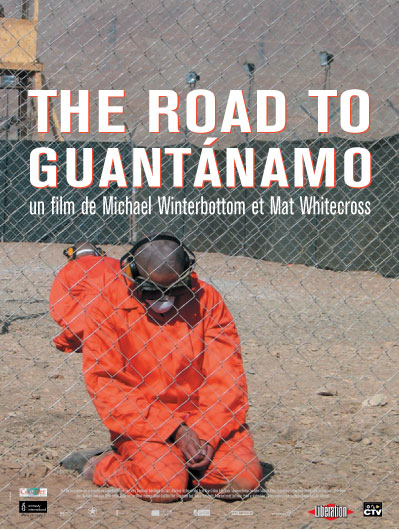
If you have not had the chance to watch The Road to Guantanamo, please do so now.
Last night, I rented out the movie and decided to watch it. This part film part documentary is the most powerful movie I have seen lately. It sure is going to inform you, move you, anger you, shame you, and mobilize you to protect America from those sacrificing our values, our laws, our humanity, and our national security.
It is a must see. (I rent it out from Blockbuster video store)
Last August, I published a commentary in which I demanded that we either offer the detainees a fair trial or that we just shut down what I called the Gitmo Gulag. After watching the movie, I am more convinced that this detention camp serves mostly to degrade our morality and credibility.
Learn more about this movie
http://www.roadtoguantanamomovie.com/
Read the following good review
ROAD TO GUANTANAMO: And Freedom and Justice for All!
By Salaam Abdul Khaliq
http://www.infocusnews.net/content/view/113/50/
In the dead of night, the sound of bombs exploding around the truck carrying Taliban fighters is horrific. By pure happenstance, four British Muslims find themselves drawn into an unenviable predicament. Earlier in February of 2002, the four Brits flew to Pakistan where one of them was to be married. Moved by an Imam’s Friday sermon to help their co-religionists, the naïve four youngsters cross the Afghanistan border to help the collateral damage of the U.S.-led invasion. Days later, they are unknowingly driven to Kundiz, a Taliban stronghold.
Now, and in the middle of nowhere, they desperately try to claw onto the back of the only vehicle that will lead them to safety. The fourth friend is nowhere in sight. What is holding them from hopping on the truck is Asif’s shoe, which would not fit. Within seconds, a flash followed by a tremendous explosion pulverizes the truck and its human content to smithereens. The three friends are knocked back, unconscious. When they wake up in the morning, they find death everywhere. Without food, water or shelter, they are captured by Northern Alliance soldiers and eventually turned over to U.S. forces. After enduring several interrogations, they are flown to Guantanamo Bay with dozens of other prisoners.
In Camp Delta, the three Brits receive America’s special brand of hospitality, totally in line with the principles of justice pioneered by the Founding Fathers but re-imagined by the Bush administration. Definitions like “enemy combatants” are coined to bypass international law concerning POWs. Labels such as “cold-blooded murderers” are licentiously tagged to justify various forms of torture. The Muslim inmates are held in open-air fenced cages much worse than animals at the zoo. Without a shred of evidence against them and without access to legal counsel, the detainees are not allowed to talk, stand or pray. They are forced to wear goggles and exercise only once a week for ten minutes. The rest of the time they have to remain crouched in their cells under the searing heat. Periodically, they are taken to an empty room and pestered with deafening music and flash strobes while shackled to the ground. To top if off, their holy book is kicked and trampled on (although the flushing down the toilet part was not shown.) For the latter, the Americans have even bettered the Israelis whose Gestapo tactics they were schooled in.
The Road to Guantanamo by award-winning British director Michael Winterbottom could not be timelier. Only recently, three prisoners held at the facility were reported to have committed suicide. The father of the Yemeni deceased now claims that his son died under torture and has demanded a full autopsy to determine the actual cause of death. The United States is increasingly under pressure from the international community to close down the camp and come clean on its human rights violations. President Bush would have none of it. He has repeatedly refused to put an end to America’s shame among the nations. Guantanamo is a blot on the conscience of all Americans; it is making a pariah state of a country that is supposed to be the beacon of justice and liberty. The very principles of due process have been made a mockery of by a junta of hawks bent on redefining the Bill of Rights and the Constitution for the sake of their own devious desires for a New World Order. Surely, Washington and Jefferson must be throwing up in their graves.
After Britain lobbied for its citizens, the “Tipton Three,” as they came to be known, started getting better treatment at the camp and were eventually flown home where they were almost immediately set free. Close to 450 other unfortunate prisoners are still held at the facility with no relief in sight. The latest suicides are signs of worse things to come.
Incredibly, none of the ex-prisoners is bitter or angry. They have all said that the experience made them better Muslims and better persons and only wished the United States would apologize. After two years of wrongful imprisonment and torture, an apology is the least owed to them. Although they may never forget, they have already forgiven. If only those who walk the corridors of power could take heed.
Watch The Road to Guantanamo and weep. Either prosecute or set free those ‘presumed guilty until proven innocent.’ American principles of freedom and justice must never be compromised for the grandstanding of neo-fascism.
Saturday, August 26, 2006
Shut Down the Gitmo Gulag
By Hussam Ayloush
June 15, 2006
http://www.cair-net.org/default.asp?Page=articleView&id=39925&theType=NB
After the suicides of three Muslim detainees at the Guantanamo Bay prison camp, questions continue to be raised about the necessity of a facility originally designated to hold the worst of the world's deadliest terrorists.
These suicides were desperate acts committed by prisoners who saw neither an end to nor a reason for their incarceration. They must have known that in Islam, committing suicide is a major sin. So what would drive these detainees to such desperate acts?
There are nearly 30,000 suicides each year in our nation. According to research data with the Institute of Medicine, 90 percent of these suicides were associated with a mental illness, in particular, depression. Human rights groups such as Amnesty International have documented that depression runs rampant among prisoners at the Guantanamo camp, resulting in an increase in attempted suicides and hunger strikes.
Many people in the Muslim world were outraged when U.S. Navy and State Department officials labeled the suicides a "good PR move." Later realizing the negative impact of these statements, the State Department took a step back.
In the wake of the 9/11 terror attacks, some 750 men belonging to 40 different nationalities were captured and imprisoned at the Cuban base. Some of the men were picked up in Afghanistan, while others were sold to American military by those looking to make money. A number of those detained were as young as 12 to 14 years old.
Desperate and depressed, many detainees tried to commit suicide by staging hunger strikes, but guards kept them alive through force-feeding, a practice criticized by the international medical community. They had been detained for years without ever being told what their crime was, or without being shown the inside of a courtroom.
In his 2002 State of the Union address, President George W. Bush described the prisoners as "terrorists who once occupied Afghanistan now occupy cells at Guantanamo Bay."
That same year, Vice President Dick Cheney told the American public that these were hardened terrorists, capable of the most heinous crimes. "These are the worst of a very bad lot. They are very dangerous. They are devoted to killing millions of Americans, innocent Americans, if they can, and they are perfectly prepared to die in the effort. And they need to be detained, treated very cautiously, so that our people are not at risk," he said.
But a report by a professor of Seton Hall University School of Law, who represents two Guantanamo prisoners, shows the kind of threat these men really posed.
According to the report, of the 517 detainees studied, only 8 percent were al-Qaeda fighters. Also, 55 percent of the prisoners had not committed any hostile acts against the U.S. or its allies. Just five percent were captured by the U.S. forces, while the rest were sold to the U.S. by Pakistani authorities, Afghanistan Northern Alliance and bounty hunters.
Reports of abuse and inhumane treatment at Guantanamo continue. A United Nations report earlier this year mentioned shackling prisoners, stripping them, covering them with hoods and blindfolds, using dogs and subjecting detainees to harsh temperatures, and stated that such abuses violated international law banning torture. Last month, a U.N. committee said the prison violated the 1984 Convention Against Torture. The U.N., key U.S. allies such as Britain and Germany, as well as U.S. Senator John McCain and others have questioned Gitmo's tactics and called for its closure.
To this day, most detainees are denied lawyers, a right to a fair trial or visitation from family members. We are told we are fighting this war to protect freedom and rule of law, yet we fail to implement those same principles at Guantanamo Bay.
It would be difficult to fathom the idea of another country taking in hundreds of American prisoners, accuse them of a crime, and then never grant them a fair trial, or any trial for that matter.
Those guilty of real crimes should be tried and punished. But those who are innocent must be released. It is time to shut down the Guantanamo Bay prison camp and end this dark chapter in our modern history.
June 15, 2006
http://www.cair-net.org/default.asp?Page=articleView&id=39925&theType=NB
After the suicides of three Muslim detainees at the Guantanamo Bay prison camp, questions continue to be raised about the necessity of a facility originally designated to hold the worst of the world's deadliest terrorists.
These suicides were desperate acts committed by prisoners who saw neither an end to nor a reason for their incarceration. They must have known that in Islam, committing suicide is a major sin. So what would drive these detainees to such desperate acts?
There are nearly 30,000 suicides each year in our nation. According to research data with the Institute of Medicine, 90 percent of these suicides were associated with a mental illness, in particular, depression. Human rights groups such as Amnesty International have documented that depression runs rampant among prisoners at the Guantanamo camp, resulting in an increase in attempted suicides and hunger strikes.
Many people in the Muslim world were outraged when U.S. Navy and State Department officials labeled the suicides a "good PR move." Later realizing the negative impact of these statements, the State Department took a step back.
In the wake of the 9/11 terror attacks, some 750 men belonging to 40 different nationalities were captured and imprisoned at the Cuban base. Some of the men were picked up in Afghanistan, while others were sold to American military by those looking to make money. A number of those detained were as young as 12 to 14 years old.
Desperate and depressed, many detainees tried to commit suicide by staging hunger strikes, but guards kept them alive through force-feeding, a practice criticized by the international medical community. They had been detained for years without ever being told what their crime was, or without being shown the inside of a courtroom.
In his 2002 State of the Union address, President George W. Bush described the prisoners as "terrorists who once occupied Afghanistan now occupy cells at Guantanamo Bay."
That same year, Vice President Dick Cheney told the American public that these were hardened terrorists, capable of the most heinous crimes. "These are the worst of a very bad lot. They are very dangerous. They are devoted to killing millions of Americans, innocent Americans, if they can, and they are perfectly prepared to die in the effort. And they need to be detained, treated very cautiously, so that our people are not at risk," he said.
But a report by a professor of Seton Hall University School of Law, who represents two Guantanamo prisoners, shows the kind of threat these men really posed.
According to the report, of the 517 detainees studied, only 8 percent were al-Qaeda fighters. Also, 55 percent of the prisoners had not committed any hostile acts against the U.S. or its allies. Just five percent were captured by the U.S. forces, while the rest were sold to the U.S. by Pakistani authorities, Afghanistan Northern Alliance and bounty hunters.
Reports of abuse and inhumane treatment at Guantanamo continue. A United Nations report earlier this year mentioned shackling prisoners, stripping them, covering them with hoods and blindfolds, using dogs and subjecting detainees to harsh temperatures, and stated that such abuses violated international law banning torture. Last month, a U.N. committee said the prison violated the 1984 Convention Against Torture. The U.N., key U.S. allies such as Britain and Germany, as well as U.S. Senator John McCain and others have questioned Gitmo's tactics and called for its closure.
To this day, most detainees are denied lawyers, a right to a fair trial or visitation from family members. We are told we are fighting this war to protect freedom and rule of law, yet we fail to implement those same principles at Guantanamo Bay.
It would be difficult to fathom the idea of another country taking in hundreds of American prisoners, accuse them of a crime, and then never grant them a fair trial, or any trial for that matter.
Those guilty of real crimes should be tried and punished. But those who are innocent must be released. It is time to shut down the Guantanamo Bay prison camp and end this dark chapter in our modern history.
Subscribe to:
Posts (Atom)