About Me

My photo
Hussam has been a lifelong human rights activist who is passionate about promoting democratic societies, in the US and worldwide, in which all people, including immigrants, workers, minorities, and the poor enjoy freedom, justice, economic justice, respect, and equality. Mr. Ayloush frequently lectures on Islam, media relations, civil rights, hate crimes and international affairs. He has consistently appeared in local, national, and international media. Full biography at: http://hussamayloush.blogspot.com/2006/08/biography-of-hussam-ayloush.html
Showing posts with label economy. Show all posts

Tuesday, May 01, 2012

This Islamic mutual fund is a 1-percenter even Occupy Wall Street would love

Following Shariah law — and thus steering clear of bank stocks — the Amana Trust Income Fund has been a stellar performer

By Jason Kephart
April 30, 2012
 InvestmentNews
 
What do a Muslim-guided mutual fund and the Occupy Wall Street movement have in common? A strict aversion to financials, among other things. In the fund's case, this aversion has led it to the top 1% of returns amongst large-cap mutual funds over the past 10 years.

The $1.4 billion Amana Trust Income Fund Ticker:(AMANX) has an annualized return of 8.92% over the last 10 years, which ranks it in the top 1% of large-cap-blend mutual funds, according to Morningstar Inc.

Part of the secret of the fund's success: It does not invest in financials or any businesses that generate interest from loans. That prohibition is based on Shariah law, which guides the business principals of Islam. The Quran, the basis of the Islamic faith, prohibits Muslims from paying or receiving interest for lending money, which is of course the basis of the banking system today. The fund also avoids businesses that profit from alcohol, pornography or gambling.

By not being invested in financials, the fund was able to avoid the worst of the stock market's drop in 2008. As the S&P 500 was dragged down 37% such firms as Lehman Brothers Holdings Inc. and Bear Stearns & Co. Inc., the fund's net asset value fell 23.4%, the best showing among large-cap funds that year.

Though the fund is based on Islamic principals, the fund is open to all investors. The Occupy Wall Street movement is returning Tuesday, and some advisers are attributing the protests to an increase of interest in socially conscious investing.

As with last year's protests, big banks again are expected to be a focal point.

“Four years after the financial crisis, not a single of the too-big-to-fail banks is smaller; in fact, they all continue to grow in size and risk,” the Occupy Wall Street press office wrote to Bloomberg News in an e-mail.

Thursday, August 27, 2009

Recession sparks interest in Islamic finance

By Mark Tutton
For CNN

LONDON, England (CNN) -- With irresponsible banking practices taking the blame for bringing about the global economic crisis, there has been a surge of interest in Islamic finance.

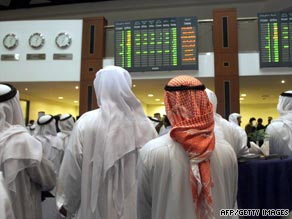
Islamic finance is estimated to be worth $700 billion and has been growing by 15 to 20 percent per year.

Islamic finance is estimated to be worth $700 billion and has been growing by 15 to 20 percent per year.

Now, a slew of academic courses are springing up to meet the demand of those wanting to break into an expanding market.

According to ratings agency Moody's, the global Islamic finance sector is worth $700 billion and has the potential to be worth $4 trillion.

What's more, the ethical principles underpinning Islamic finance are seen by some as offering a more sustainable alternative to profit-oriented conventional banking. The result is that academic institutions are lining up to offer formal training in the area.

Read full article

Monday, July 20, 2009

Islamic Finance Weathered the Global Economic Crisis Better Than Most

Islamic Finance and SRI: Two Investment Approaches That Have Weathered the Global Economic Crisis Better Than Most

Business Wire
July 20, 2009

Islamic Finance and Socially Responsible Investing (SRI) are receiving considerable attention in the financial press. Islamic Finance is a banking system and investment approach that adheres to the principles of Islamic law (sharia). Most notably this includes the sharing of profit and loss, prohibition against investing in certain types of businesses and charging a fee for lending money. In the last decade Islamic Finance has exceeded 10% annual growth. Latest figures from ISFL (International Financial Services London) estimate that the global market size was $729 billion at the end of 2007. All financial institutions have been hit by the current crisis since then, but numerous analysts agree that the outlook for Islamic Finance remains positive. Indeed, there is a growing trend amongst Western financial institutions, especially in France in the UK, to push harder to attract investment from Middle East and Muslim Asia.

SRI: Safe haven investments amidst global crisis

SRI is an investment management approach which integrates Environmental, Social and Governance (ESG) criteria in traditional financial analysis. Despite having less framework and detailed rules than Islamic Finance, SRI shares a focus on non-economic factors in its economic and social principles. According to the Social Investment Organization, SRI is seeing considerably lower shareholder redemption rates than conventional funds - strong evidence that suggests investors are committed to SRI for the long-term. Also, it is reported across the board that in the last few years SRI assets have been increasing at a higher rate than other professional managed assets. In France for example, SRI continues to grow despite the current economic turmoil with total assets amounting to 30 billion EUR at the end of 2008 (up 37% from 2007).

Bounce back potential

Economies around the world will bounce back from today's tough times, but confidence in conventional banking won't. This means that traditional banking's long term prospects have been damaged and many people and institutions will look for alternatives. Islamic finance and SRI have somewhat resisted the economic downturn, and may prove to be in the long run, a popular choice to those looking for more sustainable investment solutions.

Novethic's working paper explores crossover between SRI and Islamic Finance

Although SRI as it is applied in France today has grown into a strategy in its own right, it stems from a desire to transcribe the religious beliefs of both individual and institutional investors into financial practices, like Islamic finance. Novethic's SRI research centre examined the crossover between these two investment universes and assessed the following issues:
  • How do these investment strategies play off each other?
  • Can the religious precepts of Islamic finance compare with those that founded ethical finance in predominantly Protestant and/or Catholic countries?
  • If so, could the extension of Islamic finance throughout the Muslim world suggest any potential for the subsequent development of SRI as we know it in France today?

Click here to read the free working paper in full now: http://www.novethic.com/novethic/v3_uk/upload/Islamic_Finance_and_SRI_Working_Paper.pdf

Thursday, October 09, 2008

Islamic Banks Withstand Mortgage Crisis

Islamic Banks Withstand Mortgage Crisis


MANAMA — Islamic banks have succeeded where all others have failed, withstanding the US subprime mortgage crisis which left global markets rattling.

"The Islamic bank has a fantastic year, the underlying trend of Islamic banking businesses within ABC is very good," a senior official of the Arab Banking Corporation told the Reuters Islamic Finance summit.

Duncan Smith, the head of the Corporation's Islamic operations, said a focus on regional business and efforts to ensure products complied with Shari`ah helped shield his unit from credit-market losses.

[My note: According to the Arab Banking Corporation, Mr. Duncan Smith who is quoted in the article left the bank some months ago]

The bank's 2007 earnings from conventional non-Islamic departments fell to $125 million from $202 million in 2006.

The ongoing American subprime mortgage crisis, which is making international headlines, was sparked off last year when a steep rise in the rate of foreclosures caused more than 100 lenders to fail or file for bankruptcy.

The crisis had a domino effect on the US economy and stock market, which in turn affected almost all stock markets worldwide as early as last month.

Global banks have written down more than $80 billion in credit market losses since October alone as defaults on subprime mortgages triggered a credit crisis that threatens to tip the US economy into recession.

None of Malaysia's Islamic banks have been hit by write-downs resulting from the crisis and the resulting global credit crunch, second finance minister Mohamed Nor Yakcop told the three-day summit in the Bahraini capital Manama.

He said holders of sukuk or Islamic bonds have been shielded from the worst effects of the subprime mortgage meltdown.

Instead of interest, Islamic banks operate on the principle of sharing risk and reward among all parties in a business venture.

"Sukuk has now become a very popular product," said Nor Mohammad. (Reuters)

Economists say the global credit crunch triggered by the subprime crisis has spurred greater interest in Shari`ah-compliant financing.

"There is a feeling that the way Islamic finance is structured — the lack of freedom in leveraging, the need for real assets — that there will be some who will find Islamic financing interesting," said the Malaysian official.

He said interest in financial instruments that comply with Islamic prohibitions against investing in sectors such as alcohol, pornography and gambling was starting to emerge in China and South Korea.

"Sukuk has now become a very popular product," Mohamed Nor stressed, adding that officials from Hong Kong had consulted with Malaysia on Islamic finance.

Rasheed al-Maraj, the governor of Bahrain's Central Bank, believes the mortgage crisis could encourage weary investors to throw their weight behind Islamic assets and stocks given the collapse of Western asset prices.

"Maybe Islamic banking will be a safe bet for them," he said.

"I think opportunities exist in the United States and Europe as a result of this financial distress."

Giant banks like America's Citigroup, Britain's HSBC and Germany's Deutsche Bank recently launched Shari`ah-compliant branches.

A Deutsche Bank executive told Reuters that it was helping US and Canadian firms to sell Islamic bonds in Malaysia this year worth between $300-500 million in ringgit.

Having about 76 percent of the world's Islamic bonds, Malaysia has been promoting itself as a hub for Islamic finance but faces rivalry from neighboring Singapore and Brunei.

The Islamic banking industry, which began almost three decades ago, has made substantial growth and attracted the attention of investors and bankers across the world.

There are an estimated 300 Islamic banks and financial institutions worldwide whose assets are predicted to grow to $1 trillion by 2010.

Watch Ayloush's interview on this topic on FOX Business News