About Me

My photo
Hussam has been a lifelong human rights activist who is passionate about promoting democratic societies, in the US and worldwide, in which all people, including immigrants, workers, minorities, and the poor enjoy freedom, justice, economic justice, respect, and equality. Mr. Ayloush frequently lectures on Islam, media relations, civil rights, hate crimes and international affairs. He has consistently appeared in local, national, and international media. Full biography at: http://hussamayloush.blogspot.com/2006/08/biography-of-hussam-ayloush.html
Showing posts with label guantanamo. Show all posts

Monday, March 23, 2009

Ex-Bush official: Only two dozen of 800 at Gitmo are guilty

SAN JUAN, Puerto Rico (AP) -- A former Bush administration official says many Guantanamo detainees are innocent, and have been held only because U.S. officials hoped they would know something important.

Lawrence B. Wilkerson was chief of staff to Secretary of State Colin Powell. He says only two dozen or so of the roughly 800 men held at Guantanamo are terrorists. About 240 prisoners remain at the US military prison.

"There are still innocent people there," Wilkerson told The Associated Press on Thursday. "Some have been there six or seven years."

Wilkerson says he learned of their innocence through State Department briefings and military commanders. He first made the allegations in an Internet posting this week.

The Pentagon has said the detainees are dangerous enemy combatants.

Sunday, March 22, 2009

The Gitmo Guard Who Found Islam

(Photo source: Matt Slaby-Luceo for Newsweek)

The Guard Who Found Islam

Terry Holdbrooks stood watch over prisoners at Gitmo. What he saw made him adopt their faith.

Dan Ephron,NEWSWEEK
From the magazine issue dated Mar 30, 2009


Army specialist Terry Holdbrooks had been a guard at Guantánamo for about six months the night he had his life-altering conversation with detainee 590, a Moroccan also known as "the General." This was early 2004, about halfway through Holdbrooks's stint at Guantánamo with the 463rd Military Police Company. Until then, he'd spent most of his day shifts just doing his duty. He'd escort prisoners to interrogations or walk up and down the cellblock making sure they weren't passing notes. But the midnight shifts were slow. "The only thing you really had to do was mop the center floor," he says. So Holdbrooks began spending part of the night sitting cross-legged on the ground, talking to detainees through the metal mesh of their cell doors.

He developed a strong relationship with the General, whose real name is Ahmed Errachidi. Their late-night conversations led Holdbrooks to be more skeptical about the prison, he says, and made him think harder about his own life. Soon, Holdbrooks was ordering books on Arabic and Islam. During an evening talk with Errachidi in early 2004, the conversation turned to the shahada, the one-line statement of faith that marks the single requirement for converting to Islam ("There is no God but God and Muhammad is his prophet"). Holdbrooks pushed a pen and an index card through the mesh, and asked Errachidi to write out the shahada in English and transliterated Arabic. He then uttered the words aloud and, there on the floor of Guantánamo's Camp Delta, became a Muslim...

Read full article.

Monday, February 16, 2009

Gitmo guards expose abuse, express shame (and even convert to Islam)

For many years, at the expense of being unfairly labeled an unpatriotic American by right-wing nuts in our country, I have vocally called for the shutting down of what I called the Gitmo Gulag. I refused to have our country remembered and associated with such an immoral legacy. My moral values required that I publicize the injustice committed against those who were never charged with any crimes, such as Guantanamo Bay Prisoner 345 or when our democracy deems it necessary to torture a 16-year-old kid.

I firmly believe that the patriotic and moral thing to do is to continue to speak for the rule of law, for the human rights of every human being, and for an America that respects its moral values.

-------

Former Gitmo guard recalls abuse, climate of fear

By MIKE MELIA, Associated Press, Sat Feb 14

SAN JUAN, Puerto Rico – Army Pvt. Brandon Neely was scared when he took Guantanamo's first shackled detainees off a bus. Told to expect vicious terrorists, he grabbed a trembling, elderly detainee and ground his face into the cement — the first of a range of humiliations he says he participated in and witnessed as the prison was opening for business.

Neely has now come forward in this final year of the detention center's existence, saying he wants to publicly air his feelings of guilt and shame about how some soldiers behaved as the military scrambled to handle the first alleged al-Qaida and Taliban members arriving at the isolated U.S. Navy base.

His account, one of the first by a former guard describing abuses at Guantanamo, describes a chaotic time when soldiers lacked clear rules for dealing with detainees who were denied many basic comforts. He says the circumstances changed quickly once monitors from the International Committee of the Red Cross arrived...

Neely, a burly Texan who served for a year in Iraq after his six months at Guantanamo, received an honorable discharge last year, with the rank of specialist, and now works as a law enforcement officer in the Houston area. He is also president of the local chapter of Iraq Veterans Against the War.

An urge to tell his story led him to the University of California at Davis' Guantanamo Testimonials Project, an effort to document accounts of prisoner abuse. It includes public statements from three other former guards, but Neely was the first to grant researchers an interview. He also spoke extensively with the AP...

Terry C. Holdbrooks Jr. told the Web site cageprisoners.com in an interview this month that he saw several abuses during his service at Guantanamo in 2003, including detainees subjected to cold temperatures and loud
music, and he later converted to Islam.

Neely, 28, describes a litany of cruel treatment by his fellow soldiers, including beatings and humiliations he said were intended only to deliver physical or psychological pain...

Neely's account sheds new light on the early days of Guantanamo, where guards were hastily deployed in January 2002 and were soon confronted by men stumbling out of planes, shackled and wearing blackout goggles.

They were held in chain-link cages and moved to more permanent structures three months later.

The soldiers, many of them still in their teens, had no detailed standard operating procedures and were taught hardly anything about the Geneva Conventions, which provide guidelines for humane treatment of prisoners of war, Neely said, though some learned about them on their own initiative...

Only months had passed since the Sept. 11 attacks, and Neely said many of the guards wanted revenge. Especially before the first Red Cross visit, he said guards were seizing on any apparent infractions to "get some" by hurting the detainees. The soldiers' behavior seemed justified at the time, he said, because they were told "these are the worst terrorists in the world."

He said one medic punched a handcuffed prisoner in the face for refusing to swallow a liquid nutritional supplement, and another bragged about cruelly stretching a prisoner's torn muscles during what was supposed to be physical therapy treatments.

He said detainees were forced to submit to take showers and defecate into buckets in full view of female soldiers, against Islamic customs.

When a detainee yelled an expletive at a female guard, he said a crew of soldiers beat the man up and held him down so that the woman could repeatedly strike him in the face.

Neely says he feels personally ashamed for how he treated that elderly detainee the first day. As he recalls it, the man made a movement to resist on his way to his cage, and he responded by shoving the shackled man headfirst to the ground, bruising and scraping his face.
Other soldiers hog-tied him and left him in the sun for hours.

Only later did Neely learn — from another detainee — that the man had jerked away thinking he was about to be executed.

"I just felt horrible," Neely recalled...

Neely acknowledged that by talking about his experiences, he also has broken the nondisclosure pledge he signed before leaving Guantanamo.
He also says a lawyer told him the document he signed could not be enforced...

Neely said discussing his experience now has helped put it behind him.
"Speaking out is a good way to deal with this," he said.


Important links:

Testimony of Spc. Brandon Neely

The Guantanamo Testimonials Project

Thursday, January 22, 2009

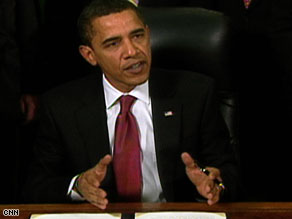
Obama signs executive orders to close Guantanamo Bay and end torture

WASHINGTON (CNN) -- President Barack Obama issued four executive orders Thursday to demonstrate a clean break from the Bush administration on the war on terror, including one requiring that the U.S. military detention facility at Guantanamo Bay be closed within a year.

President Obama speaks Thursday as he signs the executive orders.

A second executive order formally bans torture by requiring that the Army field manual be used as the guide for terror interrogations. The order essentially ends the Bush administration's CIA program of enhanced interrogation methods.

A third executive order establishes an interagency task force to lead a systematic review of detention policies and procedures and a review of all individual cases.

A fourth executive order delays the trial of Ali al-Marri, a legal U.S. resident who has been contesting his detention for more than five years as an enemy combatant in a military brig without the government bringing any charges against him...

Wednesday, January 14, 2009

BBC: Guantanamo agents 'used torture'

BBC, January 14, 2009

US agents at Guantanamo Bay tortured a Saudi man suspected of involvement in the 11 September attacks, the official overseeing trials at the camp has said.

Susan Crawford told the Washington Post newspaper that Mohammad al-Qahtani had been left in a "life-threatening condition" after being interrogated.

The Pentagon said their methods were legal in 2002, when the interviews took place - though some were now banned.

Mr Qahtani remains at Guantanamo, but all charges against him were dropped...

"His treatment met the legal definition of torture. And that's why I did not refer the case," she said.

Ms Crawford, who was appointed convening authority for military commissions in February 2007, said Mr Qahtani had been interrogated for 18 to 20 hours a day almost continuously for eight weeks...

In her newspaper interview, Ms Crawford said she was shocked, upset and embarrassed by the treatment of the detainee.

She said: "If we tolerate this and allow it, then how can we object when our servicemen and women, or others in foreign service, are captured and subjected to the same techniques?

"How can we complain? Where is our moral authority to complain? Well, we may have lost it."

According to a report by Amnesty International, Mr Qahtani was at various times forced to wear women's clothes and was tied by a lead and forced to perform animal tricks.

And the document, published last May, also contained allegations that dogs had been used on two occasions to "terrorise" the detainee...

Despite her decision to drop the prosecution, Ms Crawford said Mr Qahtani remained a "very dangerous man".

"There's no doubt in my mind he would have been on one of those planes had he gained access to the country in August 2001," she said.

Earlier this week, advisers to president-elect Barack Obama confirmed he would issue an order for the closure of Guantanamo Bay within days of taking office.

But no decision has yet been announced on the future of Mr Qahtani and other inmates who are deemed too dangerous to release, but may be impossible to prosecute.

Wednesday, August 27, 2008

I'm Home, but Still Haunted by Guantanamo

By Jumah al Dossari, former Guantanamo Bay detainee
Sunday, August 17, 2008
Published in the Washington Post

Reporter/writer's note:

I've covered the U.S. detention facility at Guantanamo Bay, Cuba, since 2004 as military correspondent for The Post. Jumah al Dossari first caught my attention in October 2005, when I heard the story of his gruesome suicide attempt during a visit from his lawyer. Then known as Detainee #261, Dossari clearly was making a public plea for help. Though the U.S. military has said many times that all detainees at Guantanamo are treated humanely and that Dossari had been getting the help he needed, detention in Guantanamo apparently became more than he could bear. His wish to die humanized the desperation of many detainees held indefinitely at the facility.

U.S. officials maintained for years that Dossari was a dangerous terrorist who had been arrested after going to Afghanistan to fight with the Taliban against U.S. forces. Dossari also spent some time in the United States and allegedly tried to recruit terrorists with fiery sermons, something that obviously raised concerns among his interrogators and jailers. Nevertheless, he was never charged with a crime, never admitted any connection to terrorism and was ultimately released to Saudi Arabia in July 2007.

His return to freedom has been smooth. He is employed, married and doing well. When I talked to him by cellphone from Dammam late last year, he spoke of a hope and a peace and a forgiveness that arose from his "black days" behind bars at Guantanamo.

-- Josh White
---


DAMMAM, Saudi Arabia

It has been a little over a year since I left the U.S. military prison at Guantanamo Bay, Cuba, but I still have trouble sleeping sometimes. On a recent restless night, I found a DVD entitled "United 93" beside the family television set. I had no idea what it was about, but I started watching. When I realized that it was about the hijacked American plane that had crashed in Pennsylvania on Sept. 11, 2001, I began to cry. It reminded me of a very simple question I had asked myself countless times during my 5 1/2 years in Guantanamo: When will humans start treating each other with respect, whatever our religion or color?

I arrived in Guantanamo in January 2002 after Pakistani forces handed me over to the United States, probably, I suspect, for a bounty. I had been in Afghanistan to assess the progress of a mosque-building project there, funded by people in my native Saudi Arabia. I knew that Afghanistan was a dangerous place, but I was paid for the trip and I needed the money, so I went. It is a decision I will always regret. When the U.S. began bombing Afghanistan in November 2001, I fled to Pakistan. At a border checkpoint, I asked Pakistani guards for help getting to the Saudi embassy. Instead, they put me in a prison, where I was kept for days with shackles on my legs.

After several weeks, I was blindfolded and flown with other detainees to a U.S. military base in Kandahar, Afghanistan. Upon our arrival there, we were thrown to the ground. Someone hit my head and forced his boot into my mouth. Despite the freezing Afghan winter, I spent several weeks in an open tent circled with barbed wire. I still have scars from my time in Kandahar. One is from a cigarette that was extinguished on my wrist and the other from the time I was pushed to a floor covered with broken glass.

One night about two weeks after our arrival, some soldiers came and cut off my clothes and put me in an orange suit. They fitted me with very tight goggles so that I could not see and put something over my ears so that I could not hear. I was chained to the floor of a plane for several hours, then again to the floor of another for what seemed like an eternity. When they pulled us off the second plane, we had no idea where we were.

It was Guantanamo.

We were taken to Camp X-Ray, which consists of cages of the sort that would normally hold animals. Imprisoned in these cages, we were forbidden to move and sometimes forbidden to pray. Later, the guards allowed us to pray and even to turn around, but whenever new detainees arrived, we were again prohibited from doing anything but sitting still.

Physical brutality was not uncommon during those first years at Guantanamo. In Camp X-Ray, several soldiers once beat me so badly that I spent three days in intensive care. My face and body were still swollen and covered in bruises when I left the hospital. During one interrogation, my questioner, apparently dissatisfied with my answers, slammed my head against the table. During others, I was shackled to the floor for hours.

In later years, such physical assaults subsided, but they were replaced by something more painful: I was deprived of human contact. For several months, the military held me in solitary confinement after a suicide attempt. I had no clothes other than a pair of shorts and no bed but a dirty plastic mat. The air conditioner was on 24 hours a day; the cell's cold metal walls made it feel as though I was living inside a freezer. There was no faucet, so I had to use the water in the toilet for drinking and washing.

I was transferred to the maximum-security Camp Five in May 2004. There I lived -- if that word can be used -- in a cell with cement walls. I was permitted to exercise once or twice a week; otherwise, I was alone in my cell at all times. I had nothing to occupy my mind except a Koran and some censored letters from my family. Interrogators told me that I would live like that for 50 years.

While I was in Camp Five, the military gave me a piece of paper that laid out the allegations against me. I had been in Guantanamo at that point for 2 1/2 years. My lawyer later told me that I had received this paper as a result of a U.S. Supreme Court ruling that detainees were to be allowed to have court hearings. We never got the promised hearings; instead, we went through military hearings at Guantanamo in which we were not shown any evidence or allowed to have lawyers. All we got was the piece of paper.

Some of the allegations were silly. One said that I had gone to Afghanistan for military training in 1989. The truth was that I had told an interrogator about a trip I had made to Afghanistan for a weekend as an overweight 16-year old after the war with the Soviet Union there ended. This trip was sponsored by the Saudi government, which had helped fund the Afghan mujaheddin and was celebrating -- with the United States -- the defeat of the Soviets.

Only one of the allegations seemed to be directly related to what is called the "War on Terror." It said that I had been "present at Tora Bora." No other details were provided. I had never heard of Tora Bora (although I later learned that it was Osama bin Laden's suspected hiding place, where U.S. forces battled the Taliban in December 2001). Later, I learned that a Yemeni detainee had told interrogators that I had been there, along with many others, because he hoped to be released if he was seen as cooperating with the U.S. military.

I know that there have been newspaper stories saying that I recruited people to go to al-Qaeda training camps. But the sheet of paper the military gave me said nothing about recruiting, which is not something I have ever done.

There were many times in Guantanamo when I felt as though I was falling apart, like a sandcastle being washed out by the tide. I lost all hope and faith. The purpose of Guantanamo is to destroy people, and I was destroyed. I decided that I preferred death to life, and I attempted suicide several times.

Once, during a break in a meeting with my attorney, I cut my arm with a razor and tried to hang myself. I do not remember it, but apparently my attorney returned earlier than I had told him to and found me suspended by my neck from the cell wall, unconscious and covered in blood. I broke a vertebra but survived with surgery.

Between suicide attempts, I tried desperately to hold on to the few fleeting moments of light that presented themselves to me. I met every few months with my attorneys and felt better whenever they were in Guantanamo, but my despair would return within a day of their departure. On occasion, I was helped by compassionate guards. After the beating in Camp X-Ray, a young female guard appeared at my cage, looking to make sure that no other guards were watching. "I'm sorry for what happened to you," she whispered to me. "You're a human being just like us." These words were a temporary balm for my bruises and loneliness. Ultimately, though, I believe it was God who did not allow me to die.

In July 2007, a colonel told me that I was going home. He did not explain why I was suddenly no longer too dangerous to live in freedom. Four days later, I was put on a Saudi government plane. When we landed in Riyadh and I saw my family, I was overwhelmed. We all cried and hugged. I said hello to someone I thought was my sister only to hear her say, "Daddy." I looked at her face again and saw that it was my daughter, who had grown from a 7-year-old child to a 13-year-old young woman while I'd been gone.

In Guantanamo, I was very angry with the people who had decided to hold me thousands of miles from home without charging or trying me. I was very angry with the people who kept me in isolation even when I was at my most desperate. I was very angry about having no rights at all. I was not angry with Americans in general and I even drew comfort from some, such as my lawyers and the kind soldier. But I could scarcely comprehend how U.S. policy had allowed me to be treated as I had been.

On the plane ride home, though, I decided that I would have to forgive to go on with my life. I also know that Sept. 11 was a great tragedy that caused some people to do dark things that they would not otherwise do. This knowledge helped me forget my miserable existence in Guantanamo and open my heart to life again, including to my recent re-marriage.

When I was watching "United 93," I thought of the soldier who had offered me compassion in Guantanamo. Her words reminded me that we all share common values, and only by holding on to them can we ensure that there is mercy and brotherhood in the world. After more than five years in Guantanamo, I can think of nothing more important.
ALSO READ:

Tuesday, July 15, 2008

Omar Khadr: The interrogation

Omar Khadr: The interrogation
Video captures righteous indignation
Colin Freeze and Omar El Akkad

WATCH VIDEO

Globe and Mail Update

July 15, 2008 at 8:04 AM EDT

Before the rage, the resignation and the tears, came the trust. Teenaged prisoner Omar Khadr seemed sure that his countrymen from Canada had come to Cuba to help him and spoke freely when they asked questions.

On the second day, the reality almost visibly dawned on his face. Agents had asked about his links to al-Qaeda, about his friends and family in Afghanistan, about whether he really thought dozens of black-eyed virgins awaited him in janna, or paradise.

The teenager realized the obvious. The Canadian agents weren't there to help. They were there to mine him for information. So he wept. He denied everything. He pulled at his hair and pulled down his orange prisoner's suit. He showed his war wounds, which nearly killed him during a battle with U.S. soldiers six months earlier.

From behind the flaps of a ventilation shaft, a hidden camera caught all the rage and righteous indignation of Omar Khadr, a Canadian citizen raised by fundamentalist parents in Taliban-controlled Afghanistan. The 16-year-old al-Qaeda suspect and Guantanamo Bay detainee was facing allegations that he murdered a U.S. soldier.

After a series of Canadian court orders, remarkable footage of federal agents questioning Mr. Khadr was released Tuesday morning - starting with an eight-minute highlight reel released at 5 a.m., and a full seven hours of footage to come later in the afternoon.

The largest portion of the eight-minute segment shows a sobbing Mr. Khadr with his head buried in his hands, repeatedly moaning "help me, help me."

The grainy footage marks the first video of a Guantanamo Bay interrogation. The Canadian Security Intelligence Service prefers to describe the meetings as "interviews".

Mr. Khadr sits in one small room for the first half of the released footage. There is little in the first room other than a desk and vents in the walls. In another room, he sits on a small couch. The rooms are similar to rooms currently in the Guantanamo prison camps. Reporters were given a tour of such a room earlier this year. The military uses the word "reservation" to refer to prisoners' meetings with interrogators — the rooms are where the "reservations" take place.

During the meetings, Mr. Khadr wears an orange jumpsuit — at the time, the orange uniforms were synonymous with all Guantanamo prisoners. Today, the orange uniform is reserved for the most unco-operative prisoners. Mr. Khadr today wears the white uniform of the most compliant prisoners.

Mr. Khadr's mood varies from dejected to hopeless for much of the released footage. At one point he lifts his shirt over his head to show extensive wounds he suffered during the 2002 Afghan firefight where he was captured.

"You say this is healthy?" he tells his interrogator. "I can't move my arm."

His interrogator, whose face is obscured by a black circle as per government security rules, is not sympathetic.

"You look like you're doing well to me," he replies. "I'm not a doctor but I think you're getting good medical care."

In another part of the footage, Mr. Khadr says "I lost my eyes. I lost my feet," referring to his injuries.

"No, you still have your eyes, and your feet are still at the ends of your legs," his interrogator replies.

Mr. Khadr's mood appears to have gotten significantly worse between one set of interviews and the next, something that causes his interrogator much frustration.

The interrogator tells Mr. Khadr that he understands the situation is stressful, but by using a strategy of non-co-operation he isn't helping himself.

At one point, the interrogator talks to Mr. Khadr about the detained Canadian's wish to go home. The interrogator says he can't help Mr. Khadr with that, but suggests Mr. Khadr help him stay in Guantanamo.

"The weather's nice [in Guantanamo]," the interrogator says. "No snow."

The joke falls flat.

The footage is part of more than seven hours that was released by the government to Mr. Khadr's lawyers. The rest of the footage is expected to be released later Tuesday.

"The videos do not show Omar Khadr being tortured or mistreated during the interrogations," Mr. Khadr's Canadian lawyer, Nathan Whitling, said in a press release accompanying the video. "As documents released last week show, Guantanamo Bay authorities manipulated Omar's environment outside the interrogation room before Canadian interrogations to induce co-operation within the interrogation room."

Documents made public last week show that Mr. Khadr was subjected to weeks of sleep deprivation by U.S. military officials before being interviewed by Canadian officials, and that the Canadians were aware of the sleep deprivation.

Mr. Khadr was sent to Guantanamo after being captured in Afghanistan in 2002. The footage, compiled from three days of interviews taped six months after his capture, is being released by his defence team. Edmonton lawyers Mr. Whitling and Dennis Edney, who fought a successful legal battle for the DVDs to be disclosed, now hope to shame Canadian politicians into lobbying Washington for the repatriation of the now-21-year-old, still jailed, but not convicted after six years.

The video will allow the public its first glimpse of an interview undertaken inside the U.S. military jail for terrorism suspects that operates on leased land in Cuba. It is also the first footage ever shown of the Canadian Security Intelligence Service in action during its 24-year history.

Three CSIS agents were sent down to question Mr. Khadr, not to lend any sympathy to him. Their mission was to gather information that might safeguard national security. Visuals of the agents' faces and audio of certain questions are edited out for security reasons.

A Department of Foreign Affairs official was along for the interviews, and had a role split between gathering intelligence and ascertaining the prisoner's well being. DFAIT's Jim Gould later wrote a briefing note stating he had met a "screwed up young man" whose trust had been abused by just about everyone who had ever been responsible for him.

Ottawa has been bracing for the video's release for weeks. Various government agencies have been coordinating their talking points in response to the footage – while both the government and Mr. Khadr's defence lawyers agree that the footage does not show Mr. Khadr being tortured or mistreated, both have a keen interest in the Canadian public's response to the video.

Mr. Khadr's defence team released the eight-minute "highlight reel" shortly before 6 a.m. Ottawa time Tuesday – in time for most morning news shows. Canadian news web sites quickly carried copies of the video.

Ottawa, too, is paying attention. When a reporter called CSIS's media line early Tuesday morning, news coverage of the Khadr tape could be heard from televisions in the background.

The rest of the world is also watching. Within hours of the video's release, news stories began to surface around the planet, including on the front pages of The New York Times and BBC web sites.

When a Democracy deems it necessary to torture a 16-year old kid

Videos show Khadr crying in detention 16-year-old also pulling hair, covering face, shedding prison tunic

Steven Edwards
Canwest News Service


Monday, July 14, 2008

http://www.canada.com/montrealgazette/news/story.html?id=0436bad1-d0db-4bf6-a831-67378ea60e78


NEW YORK - A 16-year-old Omar Khadr is seen pulling at his hair, covering his face and shedding his tunic in stills taken from videotapes of Canadian officials interrogating the Toronto-born terror suspect in Guantanamo Bay.

They are significant because they are the first publicly released photographs of Khadr, now 21, since his capture by U.S. forces following a firefight in Afghanistan in July 2002.

The public will also get its first opportunity to view excerpts of the videotapes when Khadr's lawyers place a 10-minute sequence on a website that is yet to be determined.

Khadr is seen in the photographs wearing an orange tunic, which U.S. authorities in Guantanamo have long made detainees they consider unco-operative wear.

He is also reported to be crying on several occasions.

The lawyers plan to release DVDs of the full seven hours of interrogations at a news conference Tuesday in Edmonton, where the offices of the Canadian members of Khadr's legal team are located.

The Supreme Court of Canada recently ordered the federal government to release the tapes and a series of related documents to the lawyers, who had launched successive actions to obtain the formerly confidential files.

Khadr's Pentagon-assigned military lawyer may use the tapes as part of the Canadian's defence. Khadr is scheduled to be tried before a U.S. military commission in early October on five war crimes charges, including the murder of a US soldier in a grenade attack during the 2002 firefight.

Notes U.S. officials wrote of the interrogations are included in some of the accompanying documents that were released by the lawyers separately last week.

The interrogations took place over four days from Feb. 13, 2003, at the U.S. naval base in Cuba following Khadr's transfer from detention in Afghanistan the previous October.

Sitting in a folding chair on the first day, Khadr ate a burger and drank a soda, according to one report, whose author said he could not hear what was being said.

Khadr "mumbled and had his head down" on the second day, the author said. The detainee also would "not look at his interviewers."

The author said when the Canadian officials asked Khadr why his demeanour had changed, he replied: "Promise you'll protect me from the Americans."

Khadr also said he had been tortured while detained in Afghanistan, the U.S. official wrote, and said everything he had told the Canadians the previous day "was a lie."

The Canadians asked Khadr if he'd spoken with anyone the previous night, and Khadr "denied anyone coached him," the U.S. official says. "He covered his eyes and began to cry heavily."

The U.S. official describes how Khadr removed his shirt, saying it was to show wounds on his back and shoulder. Khadr was shot and suffered shrapnel wounds during the firefight in Afghanistan.

"Khadr put his head back in his hands and cried heavily," said the official.

Khadr sat on a couch on the third day, the official writes. "He declined food that was offered to him."

The official said the Canadians asked Khadr about members of his family, among them his father, whom the U.S. has accused of being chief financier to al-Qaida leader Osama bin Laden. Khadr's father was killed in an anti-terrorist raid in Pakistan in 2003.

On the fourth day the official says the Canadian interrogators "began to get more confrontational with Khadr, who "denied killing anyone."

"Khadr began to cry and was crying when the interrogators left," the official says.

Monday, August 27, 2007

Prisoner 345

Who is prisoner 345? And why should you and I care about him?

Prisoner 345 is Sami Al-Haj. Sami Al-Haj is prisoner 345 at the United States Detainment Camp in Guantanamo Bay Cuba. Sami has been on hunger strike since 7th January, 2007.
Sami was arrested in Pakistan in December 2001 while travelling with a legitimate visa to work in Afghanistan as a cameraman for Al Jazeera. But he is being held as an ‘enemy combatant’. Al Jazeera, its offices, and its reporters have regularly come under attack (political as well as physical) by the Bush administration. Its crime is not becoming a cheer leader (like many other media outlets that we shall not mention) for the Bush administration's numerous endless wars.

The Bush administration and the Pentagon have not charged Sami with any crime. Who gives us the right to take the freedom of people and separate them from their families without charging them with crimes? How would we feel if an American is subjected to such immoral and illegal practice?
Mr. Al-Haj must be freed and compensated for all the harm we have caused to him and his family. Mr. Al-Haj deserves an apology. But again, we owe this apology to the millions of innocent Iraqis and Afghans that we have ruined their livelihoods for the terrorist crime of 9/11 which they had no responsibility for.

I never met Sami Al-Haj. I never worked for Al-Jazeera. So why do I care? This position is basically for three groups of people. The first, it is for me personally. I have to be able to look at myself in the mirror. The Prophet Muhammad (peace be upon him) said that one who sees injustice and remains silent about it is a mute devil, ie a silent partner in that injustice. I do not want to be an accomplice in this major injustice.

The second group is my children. I have always stressed to my children the Qur'anic teaching of speaking against injustice, especially when it is committed by one's own. Presently, my country is engaging in unjust practices. Remaining silent is not an option. My children need to know that when I had the chance to speak out, I did not cower. The Guantanamo Bay Gulag must be shut down. Those responsible for any crimes should have their day in an independent court and if not found guilty, they should be freed. The indefinite detention without charges is in itself a form of terrorism (called kidnapping), let alone the torture our government (sanctioned by our Attorney General Alberto Gonzales) has applied in the process. This is not what America stands for. As Americans, we have a duty to oppose those whose actions taint our country's history, image, and credibility. Of course, our first duty is to defend the dignity and humanity of every human being.

The third group is Sami’s family: his parents, his wife, and his son Mohammad who was born after Sami was illegally detained by our forces. They need to know that many Americans are ashamed and appalled by the actions of our government. We feel your pain. We pray for the day Sami will be free and will finally get to meet his son for the first time. As a father, I know that there is nothing that we can do to make up for the days Sami was deprived from seeing his son grow or the days Mohammad needed his father’s love, hugs, and comfort.

For more information on Sami Al-Haj, please read:
http://www.prisoner345.net/
Shutdown the Gitmo Gulag
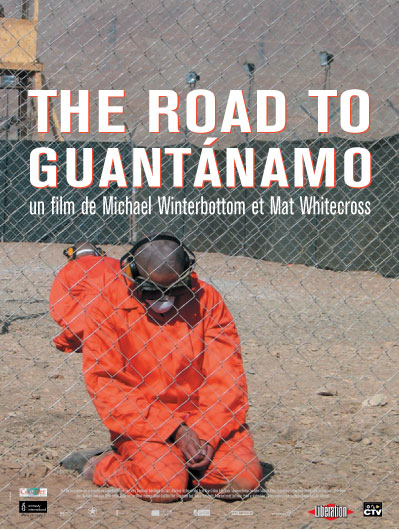
The Road to Guantanamo

Sami must be freed.


This poem below is an excerpt from an article which appeared in the leading British newspaper The Independent on June 21, 2007.

Humiliated In The Shackles
By Sami al Hajj

When I heard pigeons cooing in the trees,

Hot tears covered my face.

When the lark chirped, my thoughts composed

A message for my son.

Mohammad, I am afflicted.

In my despair, I have no one but Allah for comfort.

The oppressors are playing with me,

As they move freely around the world.

They ask me to spy on my countrymen,

Claiming it would be a good deed.

They offer me money and land,

And freedom to go where I please.

Their temptations seize

My attention like lightning in the sky.

But their gift is an empty snake,

Carrying hypocrisy in its mouth like venom,

They have monuments to liberty

And freedom of opinion, which is well and good.

But I explained to them that

Architecture is not justice.

America, you ride on the backs of orphans,

And terrorize them daily.

Bush, beware.

The world recognizes an arrogant liar.

To Allah I direct my grievance and my tears.

I am homesick and oppressed.

Mohammad, do not forget me.

Support the cause of your father, a God-fearing man.

I was humiliated in the shackles.

How can I now compose verses? How can I now write?

After the shackles and the nights and the suffering and the tears,

How can I write poetry?

My soul is like a roiling sea, stirred by anguish,

Violent with passion.

I am a captive, but the crimes are my captors'.

I am overwhelmed with apprehension.

Lord, unite me with my son Mohammad.

Lord, grant success to the righteous.

Saturday, December 30, 2006

The Road to Guantanamo - A Must See


If you have not had the chance to watch The Road to Guantanamo, please do so now.

Last night, I rented out the movie and decided to watch it. This part film part documentary is the most powerful movie I have seen lately. It sure is going to inform you, move you, anger you, shame you, and mobilize you to protect America from those sacrificing our values, our laws, our humanity, and our national security.

It is a must see. (I rent it out from Blockbuster video store)
Last August, I published a commentary in which I demanded that we either offer the detainees a fair trial or that we just shut down what I called the Gitmo Gulag. After watching the movie, I am more convinced that this detention camp serves mostly to degrade our morality and credibility.

Learn more about this movie
http://www.roadtoguantanamomovie.com/

Read the following good review

ROAD TO GUANTANAMO: And Freedom and Justice for All!
By Salaam Abdul Khaliq
http://www.infocusnews.net/content/view/113/50/

In the dead of night, the sound of bombs exploding around the truck carrying Taliban fighters is horrific. By pure happenstance, four British Muslims find themselves drawn into an unenviable predicament. Earlier in February of 2002, the four Brits flew to Pakistan where one of them was to be married. Moved by an Imam’s Friday sermon to help their co-religionists, the naïve four youngsters cross the Afghanistan border to help the collateral damage of the U.S.-led invasion. Days later, they are unknowingly driven to Kundiz, a Taliban stronghold.

Now, and in the middle of nowhere, they desperately try to claw onto the back of the only vehicle that will lead them to safety. The fourth friend is nowhere in sight. What is holding them from hopping on the truck is Asif’s shoe, which would not fit. Within seconds, a flash followed by a tremendous explosion pulverizes the truck and its human content to smithereens. The three friends are knocked back, unconscious. When they wake up in the morning, they find death everywhere. Without food, water or shelter, they are captured by Northern Alliance soldiers and eventually turned over to U.S. forces. After enduring several interrogations, they are flown to Guantanamo Bay with dozens of other prisoners.

In Camp Delta, the three Brits receive America’s special brand of hospitality, totally in line with the principles of justice pioneered by the Founding Fathers but re-imagined by the Bush administration. Definitions like “enemy combatants” are coined to bypass international law concerning POWs. Labels such as “cold-blooded murderers” are licentiously tagged to justify various forms of torture. The Muslim inmates are held in open-air fenced cages much worse than animals at the zoo. Without a shred of evidence against them and without access to legal counsel, the detainees are not allowed to talk, stand or pray. They are forced to wear goggles and exercise only once a week for ten minutes. The rest of the time they have to remain crouched in their cells under the searing heat. Periodically, they are taken to an empty room and pestered with deafening music and flash strobes while shackled to the ground. To top if off, their holy book is kicked and trampled on (although the flushing down the toilet part was not shown.) For the latter, the Americans have even bettered the Israelis whose Gestapo tactics they were schooled in.

The Road to Guantanamo by award-winning British director Michael Winterbottom could not be timelier. Only recently, three prisoners held at the facility were reported to have committed suicide. The father of the Yemeni deceased now claims that his son died under torture and has demanded a full autopsy to determine the actual cause of death. The United States is increasingly under pressure from the international community to close down the camp and come clean on its human rights violations. President Bush would have none of it. He has repeatedly refused to put an end to America’s shame among the nations. Guantanamo is a blot on the conscience of all Americans; it is making a pariah state of a country that is supposed to be the beacon of justice and liberty. The very principles of due process have been made a mockery of by a junta of hawks bent on redefining the Bill of Rights and the Constitution for the sake of their own devious desires for a New World Order. Surely, Washington and Jefferson must be throwing up in their graves.

After Britain lobbied for its citizens, the “Tipton Three,” as they came to be known, started getting better treatment at the camp and were eventually flown home where they were almost immediately set free. Close to 450 other unfortunate prisoners are still held at the facility with no relief in sight. The latest suicides are signs of worse things to come.

Incredibly, none of the ex-prisoners is bitter or angry. They have all said that the experience made them better Muslims and better persons and only wished the United States would apologize. After two years of wrongful imprisonment and torture, an apology is the least owed to them. Although they may never forget, they have already forgiven. If only those who walk the corridors of power could take heed.

Watch The Road to Guantanamo and weep. Either prosecute or set free those ‘presumed guilty until proven innocent.’ American principles of freedom and justice must never be compromised for the grandstanding of neo-fascism.

Saturday, August 26, 2006

Shut Down the Gitmo Gulag

By Hussam Ayloush
June 15, 2006
http://www.cair-net.org/default.asp?Page=articleView&id=39925&theType=NB

After the suicides of three Muslim detainees at the Guantanamo Bay prison camp, questions continue to be raised about the necessity of a facility originally designated to hold the worst of the world's deadliest terrorists.
These suicides were desperate acts committed by prisoners who saw neither an end to nor a reason for their incarceration. They must have known that in Islam, committing suicide is a major sin. So what would drive these detainees to such desperate acts?

There are nearly 30,000 suicides each year in our nation. According to research data with the Institute of Medicine, 90 percent of these suicides were associated with a mental illness, in particular, depression. Human rights groups such as Amnesty International have documented that depression runs rampant among prisoners at the Guantanamo camp, resulting in an increase in attempted suicides and hunger strikes.

Many people in the Muslim world were outraged when U.S. Navy and State Department officials labeled the suicides a "good PR move." Later realizing the negative impact of these statements, the State Department took a step back.

In the wake of the 9/11 terror attacks, some 750 men belonging to 40 different nationalities were captured and imprisoned at the Cuban base. Some of the men were picked up in Afghanistan, while others were sold to American military by those looking to make money. A number of those detained were as young as 12 to 14 years old.

Desperate and depressed, many detainees tried to commit suicide by staging hunger strikes, but guards kept them alive through force-feeding, a practice criticized by the international medical community. They had been detained for years without ever being told what their crime was, or without being shown the inside of a courtroom.

In his 2002 State of the Union address, President George W. Bush described the prisoners as "terrorists who once occupied Afghanistan now occupy cells at Guantanamo Bay."

That same year, Vice President Dick Cheney told the American public that these were hardened terrorists, capable of the most heinous crimes. "These are the worst of a very bad lot. They are very dangerous. They are devoted to killing millions of Americans, innocent Americans, if they can, and they are perfectly prepared to die in the effort. And they need to be detained, treated very cautiously, so that our people are not at risk," he said.

But a report by a professor of Seton Hall University School of Law, who represents two Guantanamo prisoners, shows the kind of threat these men really posed.

According to the report, of the 517 detainees studied, only 8 percent were al-Qaeda fighters. Also, 55 percent of the prisoners had not committed any hostile acts against the U.S. or its allies. Just five percent were captured by the U.S. forces, while the rest were sold to the U.S. by Pakistani authorities, Afghanistan Northern Alliance and bounty hunters.

Reports of abuse and inhumane treatment at Guantanamo continue. A United Nations report earlier this year mentioned shackling prisoners, stripping them, covering them with hoods and blindfolds, using dogs and subjecting detainees to harsh temperatures, and stated that such abuses violated international law banning torture. Last month, a U.N. committee said the prison violated the 1984 Convention Against Torture. The U.N., key U.S. allies such as Britain and Germany, as well as U.S. Senator John McCain and others have questioned Gitmo's tactics and called for its closure.

To this day, most detainees are denied lawyers, a right to a fair trial or visitation from family members. We are told we are fighting this war to protect freedom and rule of law, yet we fail to implement those same principles at Guantanamo Bay.

It would be difficult to fathom the idea of another country taking in hundreds of American prisoners, accuse them of a crime, and then never grant them a fair trial, or any trial for that matter.

Those guilty of real crimes should be tried and punished. But those who are innocent must be released. It is time to shut down the Guantanamo Bay prison camp and end this dark chapter in our modern history.