About Me

My photo
Hussam has been a lifelong human rights activist who is passionate about promoting democratic societies, in the US and worldwide, in which all people, including immigrants, workers, minorities, and the poor enjoy freedom, justice, economic justice, respect, and equality. Mr. Ayloush frequently lectures on Islam, media relations, civil rights, hate crimes and international affairs. He has consistently appeared in local, national, and international media. Full biography at: http://hussamayloush.blogspot.com/2006/08/biography-of-hussam-ayloush.html
Showing posts with label movie. Show all posts

Friday, August 21, 2009

An orthodox Jew + a devout Muslim = a great movie

I am a bit slow in catching up with movies. I depend on others recommending good one for me to watch. I just can't believe that the movie "Arranged" never made it on my radar screen until a friend of mine, a devout Mormon, strongly recommended it to me during my recent trip to the LDS Church's HQ in Salt Lake city.

I took note of the title and promised that I will watch it. I finally got the chance to watch it with my family.

It is a great movie with lots of positive messages. Even my teenager kids liked it.

The film, released in December of 2007, tells the story of two young women, a devout Muslim and a devout Orthodox Jews whose parents are trying to arrange suitable husbands for each.

The story, though intentionally over-simplistic, takes us into the inspiring journey of the two seemingly different young and smart women as they become close friends and as they realize how similar their traditions are.

The film challenges stereotypes about Muslim-Jewish relations, religious families and communities, and arranged marriages. It also reminds us of the challenges all religious communities face in a predominately secular society. As a bonus, the film also helps humanize and explain Muslim families, fathers, and practices.

It is a clean movie that is suitable for the whole family. Rent it and watch it. Let me know what you think.


Click to watch a trailer


---

Here is a good review to read:

Film Review
Publish Post

By Frederic and Mary Ann Brussat

http://www.spiritualityandpractice.com/films/films.php?id=17668

Arranged
Directed by Stefan Schaefer, Diane Crespo
Film Movement 03/08 DVD/VHS Feature Film
Not Rated

Rochel Meshenberg (Zoe Lister-Jones) is about to begin teaching special education at a public school in Ditmas Park, Brooklyn. She is an Orthodox Jew of marriage age, and her parents are very excited about finding her a husband through a matchmaker. They are convinced that this process will be an adventure for her, "the most exciting time of her life." At school, she meets Nasira Khaldi (Francis Benhamou), another first-year teacher who is a Muslim woman of Syrian descent. Her parents have also begun to look for a husband for her.

Rochel and Nasira's supervisor, Principal Jacoby (Marcia Jean Kurtz) is a secular Jew who is saddened to see these two bright and attractive women dressing so conservatively and subjecting themselves to what she views as an outmoded and repressive patriarchal system. For example, she suggests that Nasira's wearing of a headscarf actually gets her more attention, which "defeats the purpose." Although she claims to want only the best for the two teachers, her criticism seems highly inappropriate to Rochel and Nasira, who start a friendship.

In the classroom, the kids question whether they hate each other since they have heard that the Muslims want to get rid of Jews. Rochel designs a unity circle exercise in order to help the students better appreciate differences and the benefits of choice and community. When Rochel invites Nasira to her home to work on a school project, her mother gets very upset. She worries about what the neighbors will say about her daughter having a Muslim friend and even if it might affect her prospects for getting a husband.

Rochel begins meeting men suggested by the matchmaker, but they are either too shy or too self-absorbed. She tells her mother that she'd rather wait than marry one of them. She even visits a cousin who left the Orthodox tradition for her own brand of freedom. Invited to "step into the world and see how it feels" by going to a party, Rochel tries to fit in but she feels extremely uncomfortable with the liquor, the drug use, and couples necking.

Nasira has an easier time getting rid of a suitor who is a middle-aged acquaintance of her father. She believes that she will meet a suitable husband according to God's will and besides, she knows the tradition of arranged marriage works since her father and mother are a good example.

Arranged is one of the most spiritually literate films of the year. Directed by Stefan Schaefer and Diane Crespo, it is carried into our hearts by two radiant performances by Zoe Lister-Jones and Francis Benhamou as Rochel and Nasira. It is a delight to see a film that celebrates the integrity and zeal of two deeply religious women as they question tradition but in the end discover they can support it as a path with meaning. This is the kind of small independent film that often gets lost in the shuffle of big releases. Make time to experience this rare religious drama that salutes the free choices of an Orthodox Jew and a Muslim as they create a deep friendship at a crucial juncture in their lives.

Wednesday, August 27, 2008

CAIR Asks Studio to Change ‘Towelhead’ Film Title

The Greater Los Angeles Area office of the Council on American-Islamic Relations (CAIR-LA) today called on Warner Bros. and Warner Independent Pictures to consider changing the title of the soon-to-be-released film “Towelhead” because that derogatory term is offensive to American Muslims and Arab-Americans. CAIR says Muslims and Arab-Americans view the term “towelhead” as a racial and religious slur.

In a letter sent last week to studio executives, the Islamic civil rights and advocacy group asked that the film be called “Nothing is Private” – a title previously used in some markets.

In the letter to Warner Bros Chairman and CEO Barry M. Meyer, CAIR-LA Executive Director Hussam Ayloush said in part:

“The title…is of great concern to us, since the word is commonly used in a derogatory manner against people of the Muslim faith or Arab origin…We have no desire to inhibit the creative process or your right to produce any film you wish. However, I ask you to take the above concerns into consideration and examine the social implications of releasing the film under its current title, ‘Towelhead.’”

Ayloush said that although Warner Bros. executives have made it clear they intended no offense, the use of such a derogatory term by a major film studio will serve to increase its acceptability in public discourse.

“It is unfortunate that a major film studio would choose to exploit an ethnic slur as a sensational promotion for a movie,” said Ayloush. “Mainstreaming a bigoted term in this manner will only serve to legitimize and normalize anti-Muslim prejudice in our society.”

Saturday, November 03, 2007

Fisk: Warning, this film could make you angry

Robert Fisk commenting on the new movie "Rendition"
03 November 2007


At university, we male students used to say that it was impossible to take a beautiful young woman to the cinema and concentrate on the film. But in Canada, I've at last proved this to be untrue. Familiar with the Middle East and its abuses – and with the vicious policies of George Bush – we both sat absorbed by Rendition, Gavin Hood's powerful, appalling testimony of the torture of a "terrorist suspect" in an unidentified Arab capital after he was shipped there by CIA thugs in Washington.

Why did an Arab "terrorist" telephone an Egyptian chemical engineer – holder of a green card and living in Chicago with a pregnant American wife while he was attending an international conference in Johannesburg? Did he have knowledge of how to make bombs? (Unfortunately, yes – he was a chemical engineer – but the phone calls were mistakenly made to his number.)

He steps off his plane at Dulles International Airport and is immediately shipped off on a CIA jet to what looks suspiciously like Morocco – where, of course, the local cops don't pussyfoot about Queensberry rules during interrogation. A CIA operative from the local US embassy – played by a nervous Jake Gyllenhaal – has to witness the captive's torture while his wife pleads with congressmen in Washington to find him.

The Arab interrogator – who starts with muttered questions to the naked Egyptian in an underground prison – works his way up from beatings to a "black hole", to the notorious "waterboarding" and then to electricity charges through the captive's body...

Well, suffice it to say that the CIA guy turns soft, rightly believes the Egyptian is innocent, forces his release by the local minister of interior...Not very realistic?

Well, think again. For in Canada lives Maher Arar, a totally harmless software engineer – originally from Damascus – who was picked up at JFK airport in New York and underwent an almost identical "rendition" to the fictional Egyptian in the movie. Suspected of being a member of al-Qa'ida – the Canadian Mounties had a hand in passing on this nonsense to the FBI – he was put on a CIA plane to Syria where he was held in an underground prison and tortured. The Canadian government later awarded Arar $10m in compensation and he received a public apology from Prime Minister Stephen Harper...

But then again, what can you expect of a president whose nominee for Alberto Gonzales's old job of attorney general, Michael Mukasey, tells senators that he doesn't "know what is involved" in the near-drowning "waterboarding" torture used by US forces during interrogations. "If waterboarding is torture, torture is not constitutional," the luckless Mukasey bleated.

Yes, and I suppose if electric shocks to the body constitute torture – if, mind you – that would be unconstitutional. Right? The New York Times readers at least spotted the immorality of Mukasey's remarks. A former US assistant attorney asked "how the United States could hope to regain its position as a respected world leader on the great issues of human rights if its chief law enforcement officer cannot even bring himself to acknowledge the undeniable verity that waterboarding constitutes torture...". As another reader pointed out, "Like pornography, torture doesn't require a definition." ...

So is truth stranger than fiction? Or is Hollywood waking up – after Syriana and Munich – to the gross injustices of the Middle East and the shameless and illegal policies of the US in the region? Go and see Rendition – it will make you angry – and remember Arar. And you can take a beautiful woman along to share your fury.

Thursday, September 06, 2007

Planet of the Arabs, Muslims, Jews, Gypsies, Blacks, ...

In order to desensitize Germans over what the Nazis where about to do to Jews, Gypsies, the disabled and others, Nazis engaged in a concerted media campaign to demonize and dehumanize such people. Articles, cartoons, posters, and movies reinforced that hateful propaganda. When the time to implement the killings came, most people did not care about those victims anymore.

Many questions bother me. Where were the average people when they were being fed this virulent propaganda? Why no one objected? Did they really enjoy the vilification of other races, religions, and ethnicity? What if enough good Germans stood up and said no, could that have prevented the mass killings? Only Allah (God) knows.

What about the present day?
Which is the one group that Hollywood still enjoys demonizing? (so do right-wing politicians and extremist evangelicals; but that another story for another day)
Answer: Arabs and Muslims.

A study done by Professor Jack Shaheen and published in his book "Reel Bad Arabs" shows that out of 1000 films that have Arab & Muslim characters (from the year 1896 to 2000) 12 were positive depictions, 52 were even handed and the rest of the 900 and so were negative!

Watch this trailer-esque montage spectacle of Hollywood's relentless vilification and dehumanization of Arabs and Muslims. It is no wonder that no one cares when we hear about over 600,000 Iraqis who died due to our illegal invasion of Iraq or the hundreds of thousands of Palestinians killed, wounded, imprisoned, or ethnically cleansed by Israel.

The fact is that Hollywood has long worked on desensitizing Americans about anything Arab or Muslim. (As it did earlier, and many times today, for Blacks, Latinos, Asians, Native Americans, and others...)

Is it possible for Hollywood to entertain without having to degrade others?

Monday, July 23, 2007

A hilarious movie about being Arab in America

Watch this movie trailer for an upcoming movie and possibly a sitcom entitled Arab in America.


It is really hilarious. For more information on the movie, visit: http://www.arabinamerica.com/


To watch the trailer, click on the image below:


Monday, June 25, 2007

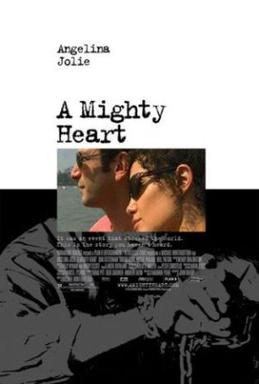
'A Mighty Heart' and the Need for Dialogue

By: Sara Shereen Bakhshian

Walking into the Sherry Lansing Theater at Paramount Studios in Los Angeles last Thursday, I knew it wasn’t going to be an easy evening. While looking forward to the screening of “A Mighty Heart”--as I had read the Marianne Pearl memoir it was based on about three years ago--I dreaded the expected feelings of despair and anguish from viewing the tragedy surrounding the kidnapping and death of Wall Street Journal writer Danny Pearl.

It can’t be denied there were moments where that theater chair felt uncomfortable, but the film was captivating, as humanity, and at times the lack of it, was eloquently depicted. From the Pearls’ love story to the account of the investigation by the then-pregnant Marianne with colleagues from the WSJ and Pakistani and American officials, I was intrigued almost as much by their interactions as how the search was conducted.

The latter because it was ultimately the point of the evening: To see how a Buddhist, Christians, Jews and Muslims came together to search for Pearl and how that unity could be built upon now.

That was literally expressed after the film with a panel discussion titled “Building Unity and Understanding in Today’s World,” and event co-sponsored by the Council on American-Islamic Relations, Progressive Christians Uniting, and Paramount Vantage, and which featured the following panelists: producer Dede Gardner, CAIR’s Hussam Ayloush, Jews on First’s Rabbi Haim Dov Beliak, and PCU’s Reverand Peter Laarman with Lisa Smithline from Interfaith Communities United for Justice and Peace moderating.

While it wasn’t unique to have a panel discussion after a film viewing, the five-minute break that included a prayer option outside the building was.

After the break, Smithline began the Q&A session by asking for a discussion on the choices one should make when faced with tragedy and fear, to which the panelists agreed that dialogue should always be the choice over violence. For example, on the subject of torture, Laarman said that members of the Christian community had to look at their own endorsements of torture. Ayloush added that at times in the film, certain characters gave the impression that torture was okay--but really it never is, and there is a need for change.

Isolating the voices of fanatics within the communities of Christianity, Judaism and Islam was part of Rabbi Beliak’s ideas of change. So, it was made clear by all the panelists that extremists in any religion don’t speak for an entire community.

But more importantly, when one from a religious community makes an extreme comment, it is up to the moderates to speak out against their co-religionist, said Laarman. Because ultimately, Ayloush added, this issue is a collective problem of the world and that everyone should strive together to reduce, if not eliminate, the root causes for violence that could be based on political, economic or religious reasons.

“Everyone has the same pain based on the same root causes,” Ayloush said. “We can help in the end.”

What remained unanswered at the end of the evening, especially after such an emotionally intense film, was tangible ways that everyone could really help. The panel was understandably under a time constraint of roughly 20 minutes, given it was getting late in the evening. At the same time, it didn’t seem to get any great new ideas on how and why everyone could develop more intra- and interfaith dialogue out.

I don't mean to pick on the panelists, but these calls for dialogue aren't really new and have been heard numerous times at interfaith occasions throughout the country. Of course there is some impatience on my part--in not wanting violence as a solution but wanting more action from conversation.

With what is happening in Darfur, Iraq, Israel and Palestinian territories and so on, I still wonder: How do moderates engage in successful dialogue with extremists who believe violence is part of the divine?

See clips from the film and read Beliefnet's interview of "A Mighty Heart" here.

--Sara Shereen Bakhshian

Saturday, June 23, 2007

In a film about a tragedy, signs of hope

Many seeing a preview of the Daniel Pearl movie praise its depictions of various religions and cultures. But it's not a consensus.

The Los Angeles Times
By Rebecca Trounson
Times Staff Writer, June 23, 2007


Can a high-profile film about a horrific event, the 2002 kidnapping and killing of American journalist Daniel Pearl, serve as a vehicle to promote religious and cultural understanding?

For many who attended an interfaith discussion that followed a screening of "A Mighty Heart" at Paramount Studios this week, the answer appeared to be yes, with panelists and audience alike generally praising the film for its sensitive depiction of the events surrounding Pearl's death.

A reporter for the Wall Street Journal, Pearl was abducted and killed in Karachi, Pakistan, where he and his wife, Mariane, had traveled to cover the war in Afghanistan and investigate the activities of Al Qaeda. The film is based on a memoir written by Mariane Pearl, a French radio journalist, and traces the harrowing period from Daniel's disappearance Jan. 23, 2002, to the discovery of his dismembered body several weeks later.

Yet several panelists noted that the film, despite its tragic central story, also offers a measure of hope in its portrayal of the culturally and religiously diverse group of investigators, diplomats, journalists and friends that joined in the effort to rescue Daniel Pearl and support his wife, then nearly six months pregnant.

"The overall message of the movie is to be able to look beyond the labels and see each of these people as human beings, and it does that very well," said Hussam Ayloush, executive director of the Southern California chapter of the Council on American-Islamic Relations.

Ayloush, whose organization cosponsored Thursday's panel discussion, said one of the most wrenching aspects of the film for him was the implicit question it raised about Islam and whether acts such as Pearl's killing could ever be justified under its tenets.

But he said he was certain of the answer. "This is a real story, about a real person who lost his life, and it's painful for me as a Muslim because it shows people who use the name 'Muslim' to justify killing," Ayloush said. "But these people were not Muslim. They were not Pakistani. They were criminal."

The audience of about 300, which included women in colorful scarves and a scattering of men with skullcaps, applauded.

For panelist Rabbi Haim Dov Beliak, there were other questions raised by the film and the events it depicts.

"Was Daniel Pearl killed because he was an American? Because [his killers] thought he was a CIA agent?" asked Beliak, a board member of the Progressive Jewish Alliance of California and co-founder of JewsOnFirst, a 1st Amendment organization. "For me, the question that burns most deeply is whether he was killed because he was Jewish."

A videotape released by Pearl's captors, and recreated in the movie, shows the reporter stating that he — and his parents — were Jewish. But Beliak said that despite such evidence of the killers' apparent motivation, he drew heart from another, somewhat mysterious statement made by Pearl on the tape — and in the movie — about his grandfather's role in the founding of the Israeli community of Bnei Brak, near Tel Aviv.

"As I thought about it, I read that as an expression of hope, having to do with the building of that city," Beliak said. "I think it was a code, to Mariane, telling her to have hope and not to lose faith in humanity."

During the panel discussion, Beliak also turned to Ayloush and commended him for helping to arrange the event, despite possible concerns about the controversial issues the film covers. The panel was cosponsored by Progressive Christians Uniting, a Los Angeles-based, mostly Protestant network of congregations and individuals, and by Paramount Vantage, the film's distributor.

"I hope it's an opening to other kinds of conversations," the rabbi said, adding that representatives of all faiths shared a responsibility to "isolate the voices of our fanatics."

Another panelist, the Rev. Peter Laarman, executive director of the Christian group, touched on a similar theme. He said anti-Muslim statements made in the wake both of Pearl's death and the terrorist attacks of Sept. 11, 2001, illustrated the need for people of various faiths to react quickly to condemn such comments, which he called canards and untruths.

But the sensitivities raised by the film were also evident in the attendance at the screening of Pakistan's consul general in Los Angeles, Syed Ibne Abbas, who told the audience of his government's efforts to rescue Pearl.

"Unfortunately, they didn't succeed," said Abbas, who also urged audience members not to equate Islam with terrorism. "I am not a preacher, but it says in the Koran that the killing of one person amounts to the killing of all humanity."

Several audience members said they were impressed by "A Mighty Heart" and its messages of hope and tolerance in the face of terrorism.

"I found it very powerful that people were able to work together to fight one evil," said Atilla Kahveci, interfaith dialogue coordinator for Global Cultural Connections, a Southern California-based foundation that works to further cultural understanding.

But not all were so positive.

Carole Lieberman, a Beverly Hills psychiatrist who has written a book on terrorism, said she was disappointed by the discussion. "They didn't get to the heart of the matter, how Mariane and Daniel Pearl were betrayed by people close to them," Lieberman said. "It seemed like a whitewash to me."

Also this week, the Council on American-Islamic Relations has released its latest survey of reported incidents of anti-Muslim bias, which showed an increase of such cases in California and nationwide in 2006.

Reports of hate crimes or discrimination against Muslims in California in 2006 nearly doubled from the previous year, according to the new study.

The council reported 709 incidents in 2006 of anti-Muslim bias, harassment or violence statewide, which included the Christmas Day beating of a man praying in a Los Angeles park and several incidents of discrimination or verbal abuse directed at Muslim women wearing scarves. Nationally, the council reported 2,467 incidents, representing a 25% increase from 2005.

Much of the rise, both in California and nationwide, appeared to stem from delays reported by many Muslims in their efforts to become U.S. citizens, Ayloush and other council representatives said.

The officials attributed the increased cases to a range of factors, including continuing fallout from the Iraq war and increased reporting of incidents by Muslim individuals and communities to the council.