
About Me

- Hussam Ayloush
- Hussam has been a lifelong human rights activist who is passionate about promoting democratic societies, in the US and worldwide, in which all people, including immigrants, workers, minorities, and the poor enjoy freedom, justice, economic justice, respect, and equality. Mr. Ayloush frequently lectures on Islam, media relations, civil rights, hate crimes and international affairs. He has consistently appeared in local, national, and international media. Full biography at: http://hussamayloush.blogspot.com/2006/08/biography-of-hussam-ayloush.html
Sunday, September 24, 2006
CNN reporter dares to ask questions
This was on Europe's CNN broadcast. It is a couple of months old, but worth watching. However, don't expect it soon here on American media.


Thursday, September 21, 2006
Cardinal Mahony, Muslim Leaders Discuss Pope Benedict's References to Islam
Leaders Reaffirm Bonds of Friendship Between Their Communities, Pledge Future Cooperation
(Los Angeles - 9/21/06) -- Muslim American leaders of Southern California met earlier today with Cardinal Roger Mahony to discuss recent statements by Pope Benedict which referenced Islam, and to reaffirm the strong bonds of friendship that have existed between the Catholic and Muslim communities of Los Angeles for several decades.
The Muslim leaders recalled the hurt that many Muslims felt when Pope Benedict quoted a 14th Century Byzantine emperor who stated that Islam was spread by the sword. The Muslim leaders also said that they welcomed the Pope’s subsequent statements clarifying his position on Muslim-Catholic relations. The delegation also condemned the violent acts that targeted Christian churches and people in the wake of the pope’s initial speech.
Dr. Muzammil Siddiqi, Chairman of the Islamic Shura Council of the Southern California, recalled “Nostra Aetate,” the Second Vatican Council’s document on the Church’s relations with non-Christians, in urging Muslims and Catholics to re-double their efforts to work more closely together on moral, social and civil rights issues. Muslim and Catholic leaders have collaborated on issues of health care, education, immigration and the alleviation of poverty. Over the years, Catholic-Muslim dialogue in Los Angeles has resulted in the publication of two joint documents: “Religion and the U.S. Constitution,” and a document on interfaith marriage.
“Los Angeles is the capital of interfaith relations and of diversity,” said Dr. Maher Hathout, Vice-Chair of the Shura Council.
Both Cardinal Mahony and the Muslim leaders agreed to create more opportunities at the local level to educate Catholics and Muslims in Southern California about one another and the bonds of friendship and cooperation between the two faiths. Cardinal Mahony said the two religions should seize this “teachable moment” to affirm commonalities and increase dialogue in all possible areas.
Muslim leaders and Cardinal Mahony discussed together a variety of opportunities for deepening contacts and promoting friendship between Muslims and Catholics in Los Angeles, including the “twinning” of parishes and mosques to promote interfaith understanding; a visit by Cardinal Mahony to a local mosque; and, a joint Catholic-Muslim delegation from Los Angeles that would visit Muslim and Christian communities in the Middle East, then visit the Vatican.
The Muslim American delegation visiting Cardinal Mahony at the Archdiocesan Catholic Center in Los Angeles, included: Dr. Muzammil Siddiqui, Chairman of the Islamic Shura Council of Southern California; Dr. Maher Hathout, Vice-Chair of the Shura; Moustafa al-Qazwini, Imam of Islamic Educational Center of Orange County; Ahmed Sakr, Islamic Educational Center; Shakeel Syed, Executive Director of the Shura Council; Hussam Ayloush, Executive Director of the Southern California of the Council on American Islamic Relations; and Salam Al-Marayati, Executive Director of the Muslim Public Affairs Council. Also attending the meeting was Father Alexei Smith, Director of Ecumenical and Interreligious Affairs for the Archdiocese of Los Angeles.
(Los Angeles - 9/21/06) -- Muslim American leaders of Southern California met earlier today with Cardinal Roger Mahony to discuss recent statements by Pope Benedict which referenced Islam, and to reaffirm the strong bonds of friendship that have existed between the Catholic and Muslim communities of Los Angeles for several decades.
The Muslim leaders recalled the hurt that many Muslims felt when Pope Benedict quoted a 14th Century Byzantine emperor who stated that Islam was spread by the sword. The Muslim leaders also said that they welcomed the Pope’s subsequent statements clarifying his position on Muslim-Catholic relations. The delegation also condemned the violent acts that targeted Christian churches and people in the wake of the pope’s initial speech.
Dr. Muzammil Siddiqi, Chairman of the Islamic Shura Council of the Southern California, recalled “Nostra Aetate,” the Second Vatican Council’s document on the Church’s relations with non-Christians, in urging Muslims and Catholics to re-double their efforts to work more closely together on moral, social and civil rights issues. Muslim and Catholic leaders have collaborated on issues of health care, education, immigration and the alleviation of poverty. Over the years, Catholic-Muslim dialogue in Los Angeles has resulted in the publication of two joint documents: “Religion and the U.S. Constitution,” and a document on interfaith marriage.
“Los Angeles is the capital of interfaith relations and of diversity,” said Dr. Maher Hathout, Vice-Chair of the Shura Council.
Both Cardinal Mahony and the Muslim leaders agreed to create more opportunities at the local level to educate Catholics and Muslims in Southern California about one another and the bonds of friendship and cooperation between the two faiths. Cardinal Mahony said the two religions should seize this “teachable moment” to affirm commonalities and increase dialogue in all possible areas.
Muslim leaders and Cardinal Mahony discussed together a variety of opportunities for deepening contacts and promoting friendship between Muslims and Catholics in Los Angeles, including the “twinning” of parishes and mosques to promote interfaith understanding; a visit by Cardinal Mahony to a local mosque; and, a joint Catholic-Muslim delegation from Los Angeles that would visit Muslim and Christian communities in the Middle East, then visit the Vatican.
The Muslim American delegation visiting Cardinal Mahony at the Archdiocesan Catholic Center in Los Angeles, included: Dr. Muzammil Siddiqui, Chairman of the Islamic Shura Council of Southern California; Dr. Maher Hathout, Vice-Chair of the Shura; Moustafa al-Qazwini, Imam of Islamic Educational Center of Orange County; Ahmed Sakr, Islamic Educational Center; Shakeel Syed, Executive Director of the Shura Council; Hussam Ayloush, Executive Director of the Southern California of the Council on American Islamic Relations; and Salam Al-Marayati, Executive Director of the Muslim Public Affairs Council. Also attending the meeting was Father Alexei Smith, Director of Ecumenical and Interreligious Affairs for the Archdiocese of Los Angeles.
Wednesday, September 20, 2006
CAIR Asks Muslims to Help Repair Damaged Churches
Palestinian churches damaged following Pope's comments on Islam
(WASHINGTON, D.C., 9/20/2006) - The Council on American-Islamic Relations (CAIR) today called on Muslims in America and worldwide to donate to help repair Palestinian churches damaged following recent remarks by Pope Benedict XVI perceived as critical of Islam and the Prophet Muhammad.
CAIR is urging Muslims to help repair the churches in the West Bank and Gaza by sending a donation to the Catholic Near East Welfare Association. SEE: http://www.cnewa.org/ (Earmark donations for: "Palestine Damaged Churches")
"Our campaign is designed to send the message that attacks on any houses of worship are not acceptable and will not be tolerated," said CAIR-Tampa Executive Director Ahmed Bedier.
In a statement released following the Pope's remarks, CAIR called for increased dialogue and outreach efforts aimed at building better relations between Christianity and Islam. CAIR's statement read in part: "Let us all continue the interfaith efforts promoted by the late Pope John Paul II, who made great strides in bringing Muslims and Catholics together for the common good."
(WASHINGTON, D.C., 9/20/2006) - The Council on American-Islamic Relations (CAIR) today called on Muslims in America and worldwide to donate to help repair Palestinian churches damaged following recent remarks by Pope Benedict XVI perceived as critical of Islam and the Prophet Muhammad.
CAIR is urging Muslims to help repair the churches in the West Bank and Gaza by sending a donation to the Catholic Near East Welfare Association. SEE: http://www.cnewa.org/ (Earmark donations for: "Palestine Damaged Churches")
"Our campaign is designed to send the message that attacks on any houses of worship are not acceptable and will not be tolerated," said CAIR-Tampa Executive Director Ahmed Bedier.
In a statement released following the Pope's remarks, CAIR called for increased dialogue and outreach efforts aimed at building better relations between Christianity and Islam. CAIR's statement read in part: "Let us all continue the interfaith efforts promoted by the late Pope John Paul II, who made great strides in bringing Muslims and Catholics together for the common good."
Tuesday, September 19, 2006
Cute kittens looking for a new home



Our cat gave birth to a new 6 beautiful kittens. Yes, again. Okay, okay, we will get her fixed.
We now have 6 new kittens that need new loving homes. We are keeping the mother and the older sister, from the earlier batch 4 months ago.
The kittens are so cute, but 8 cats at home is way too much. They are 5 weeks old.
See the photos.
http://www.kodakgallery.com/Slideshow.jsp?mode=fromshare&Uc=18mg4pip.35u4psjp&Uy=btir23&Ux=0
Just let me know how many you like to have.
Send me an email at:
ayloush@usa.net
CA Muslims to Meet with Cardinal Mahony
An association representing 70 mosques in the region also seeks a convening of bishops.
Bettye Wells Miller, Press-Enterprise, 9/18/06
Leaders of Southern California's Muslim community will meet this week with Cardinal Roger Mahony in Los Angeles to voice concern about controversial remarks Pope Benedict XVI made in Germany last week and to reinforce an interfaith relationship some leaders characterized as positive.
Shakeel Syed, executive director of the Islamic Shura Council of Southern California, said leaders attending the meeting also will ask the cardinal to convene Catholic bishops in the region to further encourage interfaith discussions. The Shura Council is an association of more than 70 mosques in Southern California.
A spokesman for Mahony confirmed that the cardinal will hold a private meeting with Muslim leaders this week. . .
Hussam Ayloush, a Corona resident and executive director of the Council on American-Islamic Relations' Southern California chapter, said American Muslims and Catholics have had a good relationship based on mutual understanding and cooperation.
The meeting with Cardinal Mahony is not intended to debate the theology of the pope's remarks, he said.
Ayloush and others condemned violent reactions to the pope's address.
Bettye Wells Miller, Press-Enterprise, 9/18/06
Leaders of Southern California's Muslim community will meet this week with Cardinal Roger Mahony in Los Angeles to voice concern about controversial remarks Pope Benedict XVI made in Germany last week and to reinforce an interfaith relationship some leaders characterized as positive.
Shakeel Syed, executive director of the Islamic Shura Council of Southern California, said leaders attending the meeting also will ask the cardinal to convene Catholic bishops in the region to further encourage interfaith discussions. The Shura Council is an association of more than 70 mosques in Southern California.
A spokesman for Mahony confirmed that the cardinal will hold a private meeting with Muslim leaders this week. . .
Hussam Ayloush, a Corona resident and executive director of the Council on American-Islamic Relations' Southern California chapter, said American Muslims and Catholics have had a good relationship based on mutual understanding and cooperation.
The meeting with Cardinal Mahony is not intended to debate the theology of the pope's remarks, he said.
"The point is to reinforce our friendship, that we oppose any language or action that tends to shake that friendship and alliance," Ayloush said.
Ayloush and others condemned violent reactions to the pope's address.
"Someone has to take a step back and diffuse the tension," he said. "We cannot afford to be pulled away from dialogue and mutual understanding. The other option is mistrust, hatred and immoral acts of violence."
Monday, September 18, 2006
So what about the Pope's "apology"?
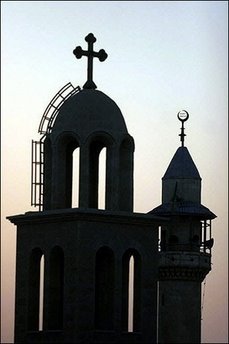
Pope Benedict XVI said during the traditional Angelus blessing from the balcony of his summer residence at Castel Gandolfo outside Rome:
"I am deeply sorry for the reactions in some countries to a few passages of my
address ... which were considered offensive to the sensibility of Muslims"
Was that an apology? Probably not. The Pope was expressing regret that Muslims were offended by his comments, but he was not apologizing for the comments themselves.
So what do we do now? I believe that regardless of how the Pope chooses to address the damage caused by those comments and regardless of his intentions because only God knows about intentions, we should all be focusing on damage control. Muslims should accept the "regrets" from the Pope and forgive. It is a reminder that we still have a long way to eduacte each other about our respective faiths.
We, Muslims and Catholics alike, should look beyond this isolated and unfortunate incident and remember that what brings us together is much greater. The legacy of late Pope John Paul II has helped foster a culture and momentum of friendship, cooperation, and mutual respect between the world's two largest religions. We should not allow for one negative incident to make us forget all the good that has joined us together. We should not let the clouds of anger and mistrust cover our world. We have no choice but to continue working together to promote friendship and cooperation because the other choice is not only ugly, but it is also un-Islamic and un-Christian.
I take the opportunity to voice by utmost disgust and dismay, as a Muslim, with those who chose to express their legitimate disagreement with the Pope through the un-Islamic and immoral acts of violence. Correcting misperceptions about Islam cannot be achieved by killing nuns, attacking churches, or burning effigies. Such acts are in complete contradiction of Islamic teachings and serve nothing but to widen the gap and polarization in our wounded world. We need bridge builders and peacemakers and not people who add fuel to the fire.
Let's learn from the past and focus on a brighter future.
Sunday, September 17, 2006
Response to comments by Pope Benedict XVI
A response that involves violent protests, attacks on Christians or their churches, or a counter attack on the Christian faith is un-Islamic and certainly not morally acceptable. I call upon fellow Muslims to follow the example of Prophet Muhammad who responded to those who abused him by forgiving them and assuming that they are doing so because they did not truly know him. He focused on educating those people and showing kindness to them.
The best response to the Pope's inaccurate and divisive remarks is for Muslims and Catholics worldwide to increase dialogue and outreach efforts aimed at building better relations between Christianity and Islam.
We can not continue to live in the shadow of the past conflicts such as Spain or the Crusades. It is time we move forward by learning from the mistakes of the past. It is time we use the positive teachings common in both religions to bring both communities closer. It is time to build mutual trust and understanding. It is time we work together to tackle the serious threats of ignorance, extremism, poverty, rights of immigrants, rights of workers, wars, occupation, racism, and all other social ills.
We should not be pulled into this nonsense clash of civilizations by fueling it with inflammatory comments. It is not acceptbale when a Muslim does it and it is not acceptable when a Christian does it either, especially those in leadership position.
If religious leaders refuse to lead, then it is up to us, the followers, to lead humanity into peace and dialogue. Let's leave a better world for our children.
The best response to the Pope's inaccurate and divisive remarks is for Muslims and Catholics worldwide to increase dialogue and outreach efforts aimed at building better relations between Christianity and Islam.
We can not continue to live in the shadow of the past conflicts such as Spain or the Crusades. It is time we move forward by learning from the mistakes of the past. It is time we use the positive teachings common in both religions to bring both communities closer. It is time to build mutual trust and understanding. It is time we work together to tackle the serious threats of ignorance, extremism, poverty, rights of immigrants, rights of workers, wars, occupation, racism, and all other social ills.
We should not be pulled into this nonsense clash of civilizations by fueling it with inflammatory comments. It is not acceptbale when a Muslim does it and it is not acceptable when a Christian does it either, especially those in leadership position.
If religious leaders refuse to lead, then it is up to us, the followers, to lead humanity into peace and dialogue. Let's leave a better world for our children.
Wednesday, September 13, 2006
Reaching Out to Build Trust
U.S. Muslims' efforts help, strife abroad doesn't, leaders say
Monday, September 11, 2006
By BETTYE WELLS MILLER
The Press-Enterprise
In the days after the Sept. 11 attacks, Mustafa Kuko advised Inland Muslims to reach out to their neighbors and let them know they are Americans, too.
Muslims in the Inland area and in Southern California have held open houses at their mosques, invited visitors to community dinners during the holy month of Ramadan, cooperated in interfaith projects and answered pointed questions about Islam in classrooms, churches and synagogues.
Five years later, Kuko, director of the Islamic Center of Riverside, and other leading Muslims in Southern California say those efforts have allayed some fears about their religion and generally improved relations with non-Muslims in California.
But despite their best efforts, the perception persists worldwide that Islam is a religion of violence, a view that Kuko and other leaders said puts American Muslims in a tough position: How can they win the trust of neighbors who are continually frightened by news of terrorism by Muslims?
Hussam Ayloush, a Corona resident and executive director of the Southern California chapter of the Council on American-Islamic Relations, said he doesn't like it when people are anti-American, just as he doesn't like it when Americans ask him what is wrong with Islam.
"I am all for isolating and challenging fanatic, violent Muslims, but most Muslims here are interested in being able to live the American dream: to raise a family, to have a good job and to have good relations with their neighbors.
"We're as American as apple pie," Ayloush said.
Monday, September 11, 2006
By BETTYE WELLS MILLER
The Press-Enterprise
In the days after the Sept. 11 attacks, Mustafa Kuko advised Inland Muslims to reach out to their neighbors and let them know they are Americans, too.
Muslims in the Inland area and in Southern California have held open houses at their mosques, invited visitors to community dinners during the holy month of Ramadan, cooperated in interfaith projects and answered pointed questions about Islam in classrooms, churches and synagogues.
Five years later, Kuko, director of the Islamic Center of Riverside, and other leading Muslims in Southern California say those efforts have allayed some fears about their religion and generally improved relations with non-Muslims in California.
But despite their best efforts, the perception persists worldwide that Islam is a religion of violence, a view that Kuko and other leaders said puts American Muslims in a tough position: How can they win the trust of neighbors who are continually frightened by news of terrorism by Muslims?
Hussam Ayloush, a Corona resident and executive director of the Southern California chapter of the Council on American-Islamic Relations, said he doesn't like it when people are anti-American, just as he doesn't like it when Americans ask him what is wrong with Islam.
"I am all for isolating and challenging fanatic, violent Muslims, but most Muslims here are interested in being able to live the American dream: to raise a family, to have a good job and to have good relations with their neighbors.
"We're as American as apple pie," Ayloush said.
Bush's 'fascist' talk alienates Muslims
A letter to the editor
By Hussam Ayloush, Press Enterprise, September 6, 2006
William R. Snaer [Call our Enemy What it is: Islamofascist, Aug. 27] is mistaken.
Language can be an important tool in our fight against terrorism as well as in winning the hearts and minds of 1.3 billion Muslims. Immediately after the U.K. officials foiled an alleged terror plot involving transport of liquid explosives on planes, President George W. Bush held a press conference and stated, "this nation is at war with Islamic fascists."
Needless to say, it was offensive and erroneous. Islam teaches its followers to promote the values of peace, justice, human brotherhood, and positive cooperation among nations. These teachings culminated in a rich Islamic civilization, the likes of which are still visible in Spain, the Middle East and Southeast Asia.
To link Islam with fascism due to the acts of a small minority falsely claiming a link to Islam is inaccurate, unfair, and counter-productive.
During World War II, there were priests who blessed German and Italian soldiers' efforts to spread fascism, but we never talked about Christian fascism, and rightly so, because linking Judaism, Christianity or Islam and their good teachings with the evil of fascism is an oxymoron.
Bush's ill-conceived statement, now repeated by a number of right-wing politicians and columnists, unfairly contributes to an increasing tide of anti-Muslim sentiment in America.
Moreover, Bush's anti-Islam rhetoric offends and alienates the very Muslim masses that we strongly need in order to isolate the fringe minority of violent extremists. Let's not forget that those who tipped British officials off to the alleged terror plot were Muslims. Do we really want to send Muslims a message that this war is actually a war on Islam? Do we really want to play into the hands of extremists who so far have been despised and rejected by the overwhelming majority of Muslims?
Those who insist on offending and demonizing one fourth of our world's population fall under one of two categories. They are either Islamophobes who have found joy in a new slur or, more alarming, are deliberately seeking a wider and longer conflict between our country and the Muslim world.
Extremism and hatred, on all sides, are the fuel of terrorism and violence. Our best approach to containing terrorism is through a culture of mutual respect, trust, and dialogue. The more prevailing this culture becomes, the more isolated extremists are going to be.
As for our language, we should call the enemy what it is - extremist, radical, terrorist, fascist.
Hussam Ayloush is the executive director of Council on American-Islamic Relations, Southern California chapter, and is a resident of Corona.
By Hussam Ayloush, Press Enterprise, September 6, 2006
William R. Snaer [Call our Enemy What it is: Islamofascist, Aug. 27] is mistaken.
Language can be an important tool in our fight against terrorism as well as in winning the hearts and minds of 1.3 billion Muslims. Immediately after the U.K. officials foiled an alleged terror plot involving transport of liquid explosives on planes, President George W. Bush held a press conference and stated, "this nation is at war with Islamic fascists."
Needless to say, it was offensive and erroneous. Islam teaches its followers to promote the values of peace, justice, human brotherhood, and positive cooperation among nations. These teachings culminated in a rich Islamic civilization, the likes of which are still visible in Spain, the Middle East and Southeast Asia.
To link Islam with fascism due to the acts of a small minority falsely claiming a link to Islam is inaccurate, unfair, and counter-productive.
During World War II, there were priests who blessed German and Italian soldiers' efforts to spread fascism, but we never talked about Christian fascism, and rightly so, because linking Judaism, Christianity or Islam and their good teachings with the evil of fascism is an oxymoron.
Bush's ill-conceived statement, now repeated by a number of right-wing politicians and columnists, unfairly contributes to an increasing tide of anti-Muslim sentiment in America.
Moreover, Bush's anti-Islam rhetoric offends and alienates the very Muslim masses that we strongly need in order to isolate the fringe minority of violent extremists. Let's not forget that those who tipped British officials off to the alleged terror plot were Muslims. Do we really want to send Muslims a message that this war is actually a war on Islam? Do we really want to play into the hands of extremists who so far have been despised and rejected by the overwhelming majority of Muslims?
Those who insist on offending and demonizing one fourth of our world's population fall under one of two categories. They are either Islamophobes who have found joy in a new slur or, more alarming, are deliberately seeking a wider and longer conflict between our country and the Muslim world.
Extremism and hatred, on all sides, are the fuel of terrorism and violence. Our best approach to containing terrorism is through a culture of mutual respect, trust, and dialogue. The more prevailing this culture becomes, the more isolated extremists are going to be.
As for our language, we should call the enemy what it is - extremist, radical, terrorist, fascist.
Hussam Ayloush is the executive director of Council on American-Islamic Relations, Southern California chapter, and is a resident of Corona.
Sunday, September 10, 2006
American Muslims Five Years Later - PBS Show

VIDEO: AMERICAN MUSLIMS FIVE YEARS LATER PBS Religion & Ethics Newsweekly, 9/8/06
Watch video:
http://www.pbs.org/wnet/religionandethics/week1002/feature.html#
BOB ABERNETHY, anchor: After the attack by Islamic radicals five years ago, American Muslims feared violent reprisals against them.
Those did not happen, but today many Muslims in this country say they live under the specter of suspicion. They feel their neighbors don't trust them and their government threatens them, as Saul Gonzalez reports. . .
HUSSAM AYLOUSH (Executive Director, CAIR Southern California): In 2001, when the American Muslim community was introduced to the FBI was when we were being suspected as a whole community. Muslims were visited at 3:00 a.m, They were visited in their home and their schools.
GONZALEZ: Hussam Ayloush is the executive director of the Southern California office of the Council on American-Islamic Relations (CAIR), a civil rights and advocacy group. Although Muslim Americans still have concerns about how the FBI investigates their community, Ayloush says much has improved through continued interaction and improved communication.
Mr. AYLOUSH: Things have changed, and I have to admit to that. The positive atittude from the leadership of the FBI on the national level, but also on the local level, the openness, the agreement to work with the Muslim community as partners rather than suspects has made a big difference. Even when someone is being questioned, there is a high level of respect that is being presented and reflected in the attitude of the FBI towards Muslims.
Subscribe to:
Posts (Atom)